






Diese Website verwendet Cookies und ähnliche Technologien. Dabei handelt es sich um kleine Textdateien, die auf eurem Computer gespeichert und ausgelesen werden. Indem ihr auf "Alles akzeptieren" klickt, stimmt ihr der Verarbeitung von Daten, der Erstellung und Verarbeitung von individuellen Nutzungsprofilen über Websites und über Partner und Geräte hinweg sowie der Übermittlung eurer Daten an Drittanbieter zu, die eure Daten teilweise in Ländern außerhalb der Europäischen Union verarbeiten (GDPR Art. 49). Einzelheiten hierzu findet ihr in den Datenschutzhinweisen. Die Daten werden für Analysen und für eigene Zwecke Dritter verwendet. Weitere Informationen, auch über die Datenverarbeitung durch Drittanbieter und die Möglichkeit des Widerrufs, findet ihr in den Einstellungen und in unseren Datenschutzhinweisen. Hier könnt ihr mit den notwendigen Tools fortfahren.
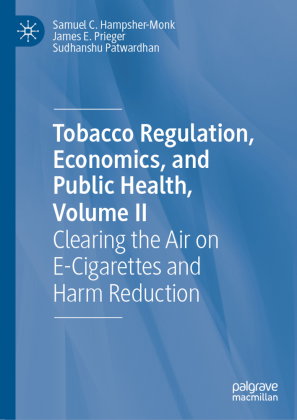
- Verlag: Springer, Berlin
- Autor: Samuel C. Hampsher-Monk
- Artikel-Nr.: KNV96946585
- ISBN: 9783031470868
For millions, e-cigarettes provide a means to relieve nicotine cravings while avoiding harmful cigarette smoke. In the second volume in this three-volume resource, the authors provide a critical review of evidence concerning the health effects of vaping and whether using e-cigarettes helps or hinders cessation from smoking. The empirical evidence, however, does not help decision-makers resolve the normative questions relating to e-cigarettes. Different priorities, values, and interpretations of available data have led to seemingly intractable disagreements between stakeholders about the promise of e-cigarettes for smoking cessation and the risks they pose to public health. The misinformation and motivated bias surrounding issues regarding vaping both follow from but also enhance polarization, perpetuating confusion about e-cigarettes and leading to poor decision-making by government agencies and people who smoke. The authors argue that, ultimately, the safety and efficacy of e-cigarettes for smoking cessation are not immutable properties of the product class-itself diverse and dynamic-but are also contingent upon the conditions of the regulatory environment, and the manner in which e-cigarettes are discussed by regulators and the media. This volume provides important context to help decision makers at all levels better understand the risk and benefits of e-cigarettes and the tradeoffs between them.