






Diese Website verwendet Cookies und ähnliche Technologien. Dabei handelt es sich um kleine Textdateien, die auf eurem Computer gespeichert und ausgelesen werden. Indem ihr auf "Alles akzeptieren" klickt, stimmt ihr der Verarbeitung von Daten, der Erstellung und Verarbeitung von individuellen Nutzungsprofilen über Websites und über Partner und Geräte hinweg sowie der Übermittlung eurer Daten an Drittanbieter zu, die eure Daten teilweise in Ländern außerhalb der Europäischen Union verarbeiten (GDPR Art. 49). Einzelheiten hierzu findet ihr in den Datenschutzhinweisen. Die Daten werden für Analysen und für eigene Zwecke Dritter verwendet. Weitere Informationen, auch über die Datenverarbeitung durch Drittanbieter und die Möglichkeit des Widerrufs, findet ihr in den Einstellungen und in unseren Datenschutzhinweisen. Hier könnt ihr mit den notwendigen Tools fortfahren.
- Verlag: Springer, Berlin
- Autor: Lars Jaeger
- Artikel-Nr.: KNV96946587
- ISBN: 9783031471377
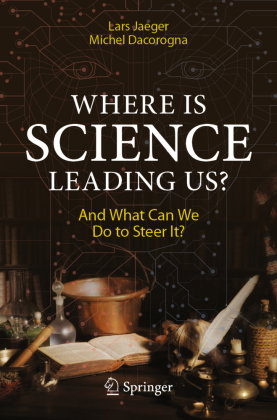
This book charts the evolution of the sciences and technologies that have shaped our modern age like nothing else in the last 60 years. As well as describing many exciting developments, it will also highlight the challenges and dangers of the technologies that have emerged from them. While science and technology have brought about enormous and often astonishing improvements in our quality of life, they have often also brought with them considerable risks, including the risk of human extinction. We place particular emphasis on the aspects that directly impact us as human beings: Artificial Intelligence (AI), enhancements of our brains/minds through innovative neuro-technologies, and the integration of nanotechnology into our bodies for early disease detection and elimination. What philosophical implications arise from these transformations? Authored by two theoretical physicists who are also experts in economics and capital markets - a rather rare combination - the book will explainthe developments of modern science and the resulting technologies. It also examines the current state of play and emerging developments in a manner accessible to non-scientists. Based on their own experience and the analysis, the authors also propose ways in which science can progress more harmoniously in future.