






Diese Website verwendet Cookies und ähnliche Technologien. Dabei handelt es sich um kleine Textdateien, die auf eurem Computer gespeichert und ausgelesen werden. Indem ihr auf "Alles akzeptieren" klickt, stimmt ihr der Verarbeitung von Daten, der Erstellung und Verarbeitung von individuellen Nutzungsprofilen über Websites und über Partner und Geräte hinweg sowie der Übermittlung eurer Daten an Drittanbieter zu, die eure Daten teilweise in Ländern außerhalb der Europäischen Union verarbeiten (GDPR Art. 49). Einzelheiten hierzu findet ihr in den Datenschutzhinweisen. Die Daten werden für Analysen und für eigene Zwecke Dritter verwendet. Weitere Informationen, auch über die Datenverarbeitung durch Drittanbieter und die Möglichkeit des Widerrufs, findet ihr in den Einstellungen und in unseren Datenschutzhinweisen. Hier könnt ihr mit den notwendigen Tools fortfahren.
- Verlag: Wiley & Sons
- Autor: Judith Shapiro
- Artikel-Nr.: KNV96953504
- ISBN: 9781509559688
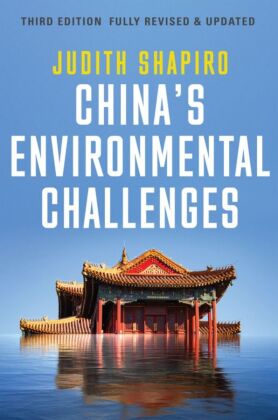
Drawing on six core analytical concepts - globalization, governance, national identity, civil society, environmental justice, and extractivism - Shapiro ably demonstrates the multifaceted and complex nature of this struggle. China's precipitous economic growth has carried a heavy cost in air and water pollution, soil contamination, and loss of habitat for the biodiversity upon which human life depends. But its quest for sustainability has been further hampered by authoritarian governance patterns, soaring middle class consumption, the need to provide employment and safety nets for a population of more than one billion, and a manufacturing sector thirsty to secure global resources and sell to new markets.
Transformation to a more sustainable development model is still possible. But, as Shapiro persuasively argues, this will require humility, creativity, and a rejection of business as usual. China - and the planet - are at a pivotal moment.