






Diese Website verwendet Cookies und ähnliche Technologien. Dabei handelt es sich um kleine Textdateien, die auf eurem Computer gespeichert und ausgelesen werden. Indem ihr auf "Alles akzeptieren" klickt, stimmt ihr der Verarbeitung von Daten, der Erstellung und Verarbeitung von individuellen Nutzungsprofilen über Websites und über Partner und Geräte hinweg sowie der Übermittlung eurer Daten an Drittanbieter zu, die eure Daten teilweise in Ländern außerhalb der Europäischen Union verarbeiten (GDPR Art. 49). Einzelheiten hierzu findet ihr in den Datenschutzhinweisen. Die Daten werden für Analysen und für eigene Zwecke Dritter verwendet. Weitere Informationen, auch über die Datenverarbeitung durch Drittanbieter und die Möglichkeit des Widerrufs, findet ihr in den Einstellungen und in unseren Datenschutzhinweisen. Hier könnt ihr mit den notwendigen Tools fortfahren.
- Verlag: Springer, Berlin
- Autor: Boaz Ganor
- Artikel-Nr.: KNV96973530
- ISBN: 9783031136764
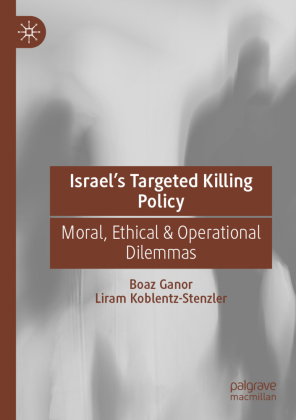
The book explores the main moral, ethical and operational dilemmas of targeted killings from an Israeli perspective. Even though many countries contending with terrorism have adopted this tool (either overtly or covertly) within the arsenal used in implementing their counter-terrorism policies, it seems that Israel, as one of the world's leading practitioner of targeted killing in its counter-terrorism effort, constitutes the most appropriate case study for reviewing implications and dilemmas associated with this practice. Each chapter will present a different ethical-moral-operational dilemma emanating from a deployment of a targeted killing. The analysis of Israeli considerations and solutions to these dilemmas is built around interviews with Israeli decision-makers, former senior security officials and other experts. The chapters also cover public opinion polls in order to highlight the views of the Israeli public vis-a-vis each dilemma. Finally, chapters will conclude with lessons learned and offer recommendations for a practical and moral solution. The final chapter then draws together universal conclusions and recommendations for the use of targeted killings.