






Diese Website verwendet Cookies und ähnliche Technologien. Dabei handelt es sich um kleine Textdateien, die auf eurem Computer gespeichert und ausgelesen werden. Indem ihr auf "Alles akzeptieren" klickt, stimmt ihr der Verarbeitung von Daten, der Erstellung und Verarbeitung von individuellen Nutzungsprofilen über Websites und über Partner und Geräte hinweg sowie der Übermittlung eurer Daten an Drittanbieter zu, die eure Daten teilweise in Ländern außerhalb der Europäischen Union verarbeiten (GDPR Art. 49). Einzelheiten hierzu findet ihr in den Datenschutzhinweisen. Die Daten werden für Analysen und für eigene Zwecke Dritter verwendet. Weitere Informationen, auch über die Datenverarbeitung durch Drittanbieter und die Möglichkeit des Widerrufs, findet ihr in den Einstellungen und in unseren Datenschutzhinweisen. Hier könnt ihr mit den notwendigen Tools fortfahren.
- Verlag: Springer, Berlin
- Autor: Building Energy Research Center of THU
- Artikel-Nr.: KNV96974031
- ISBN: 9789819978748
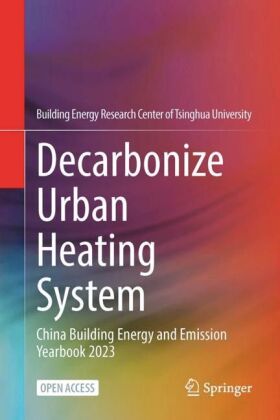
This is an open access book.
The double-carbon target has been one of the main motivations and goals for China's social and economic development. The building sector is one of the most important sectors to achieve energy saving and emission reduction.
This publication thoroughly examines China's building energy use and carbon emissions with a focus on four categories, including their characteristics and the technologies needed to achieve zero carbon emissions.
This year, the key issue is developing carbon-neutrality pathways for China's urban heating system. This report comprehensively discusses the current status and future forecast of heat demand in buildings and non-process industries, introduces the challenges facing the urban energy supply system in achieving carbon neutrality, and elucidates the low-carbon heating model based mainly on low-grade and low-carbon waste heat.
Extensive survey and monitoring data and case studies are presentedthroughout the book. The discussion of technologies and policies has been the subject of extensive research and evidence for over a decade. The information, data, and policy recommendations are of relevance to a national and global audience working in the fields of energy, climate change, engineering, and building science.