






Diese Website verwendet Cookies und ähnliche Technologien. Dabei handelt es sich um kleine Textdateien, die auf eurem Computer gespeichert und ausgelesen werden. Indem ihr auf "Alles akzeptieren" klickt, stimmt ihr der Verarbeitung von Daten, der Erstellung und Verarbeitung von individuellen Nutzungsprofilen über Websites und über Partner und Geräte hinweg sowie der Übermittlung eurer Daten an Drittanbieter zu, die eure Daten teilweise in Ländern außerhalb der Europäischen Union verarbeiten (GDPR Art. 49). Einzelheiten hierzu findet ihr in den Datenschutzhinweisen. Die Daten werden für Analysen und für eigene Zwecke Dritter verwendet. Weitere Informationen, auch über die Datenverarbeitung durch Drittanbieter und die Möglichkeit des Widerrufs, findet ihr in den Einstellungen und in unseren Datenschutzhinweisen. Hier könnt ihr mit den notwendigen Tools fortfahren.
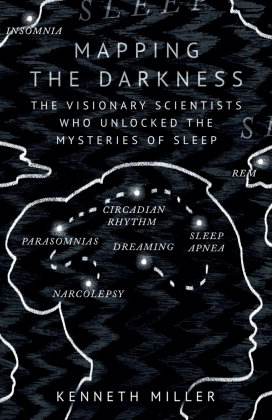
- Verlag: Oneworld Publications
- Autor: Kenneth Miller
- Artikel-Nr.: KNV96975320
- ISBN: 9780861545162
'Fascinating, magisterially researched, and brilliantly written.' Steve Silberman, author of Neurotribes
Thirty-two days underground. No heat. No sunlight.
4 June 1938. Nathaniel Kleitman and his research student make their way down the seventy-one steps leading to the mouth of Mammoth Cave. They are about to embark on one of the most intrepid and bizarre experiments in medical history, one which will change our understanding of sleep forever. Undisturbed by natural light, they will investigate what happens when you overturn one of the fundamental rhythms of the human body. Together, they enter the darkness.
When Kleitman first arrived in New York, a penniless twenty-year-old refugee, few would have guessed that in just a few decades he would revolutionise the field of sleep science. In Mapping the Darkness, Kenneth Miller weaves science and history to tell the story of the outsider scientists who took sleep science from the fringes to a mainstream obsession. Reliving the spectacular experiments, technological innovation, imaginative leaps and single-minded commitment of these early pioneers, Miller provides a tantalising glimpse into the most mysterious third of our lives.