






Diese Website verwendet Cookies und ähnliche Technologien. Dabei handelt es sich um kleine Textdateien, die auf eurem Computer gespeichert und ausgelesen werden. Indem ihr auf "Alles akzeptieren" klickt, stimmt ihr der Verarbeitung von Daten, der Erstellung und Verarbeitung von individuellen Nutzungsprofilen über Websites und über Partner und Geräte hinweg sowie der Übermittlung eurer Daten an Drittanbieter zu, die eure Daten teilweise in Ländern außerhalb der Europäischen Union verarbeiten (GDPR Art. 49). Einzelheiten hierzu findet ihr in den Datenschutzhinweisen. Die Daten werden für Analysen und für eigene Zwecke Dritter verwendet. Weitere Informationen, auch über die Datenverarbeitung durch Drittanbieter und die Möglichkeit des Widerrufs, findet ihr in den Einstellungen und in unseren Datenschutzhinweisen. Hier könnt ihr mit den notwendigen Tools fortfahren.
- Verlag: Springer, Berlin
- Autor: Ramesh C Ray
- Artikel-Nr.: KNV96987127
- ISBN: 9789819982653
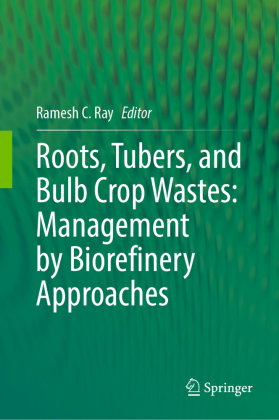
This edited book brings forth comprehensive information on the bioprocessing and biovalorization of root (i.e., cassava, sweet potato, yams, and aroids), tuber (i.e., potato, carrot, turnip, artichoke and beet root), and bulb (i.e., onion and garlic) crop wastes into various products and platform chemicals in a biorefinery approach.
The non-edible portion of roots, tubers, and bulb crops, after processing (waste), such as peels, skins, pulps, rejects, and unmarketable tubers, account for about 20-40% of the total weight of the fresh produce. Tropical tuber crops such as cassava, yams, aroids, and sweet potato generate bagasse, the byproduct of the starch processing industry, which contains about 30-50% starch and fibrous materials on a dry weight basis. Similarly, the husk is the leading waste from onion and garlic processing. The amount of waste and byproducts of potato industry is estimated to be around 12-20% of their total production. These wastes pose increasing disposal and potentially severe pollution problems and represent a loss of valuable biomass and nutrients. Roots, tubers, and bulb wastes usually have a composition of sugar, starch, proteins, phenolic phytochemicals, fibers, and minerals. Therefore, they should not be considered as "wastes" but raw materials for other industrial processes in the biorefinery approach. These wastes provide conditions amenable for the growth of microorganisms and opens up great opportunities for their reuse in fermentation processes to develop value-added bioproducts such as enzymes, single-cell proteins, bio-absorbents, phenolic bioactive compounds, aroma and flavor compounds, organic acids, and biofuels. This book fills the gap in literature about the processes and by-products. The book is composed of 16- chapters deep diving into valorization and bioprocessing of a range of tuber crop waste. The book explores these processes in 11 different crops and highlights the life cycle assessment as well as highlightsthe opportunities about commercialization of technologies used in bioprocessing and bio-valorization of root crop waste.
The processes explained in the book are rooted in the principles of circular economy. This book is of interest to teachers, researchers, environmentalists, bio-based industrialist, and policymakers.