






Diese Website verwendet Cookies und ähnliche Technologien. Dabei handelt es sich um kleine Textdateien, die auf eurem Computer gespeichert und ausgelesen werden. Indem ihr auf "Alles akzeptieren" klickt, stimmt ihr der Verarbeitung von Daten, der Erstellung und Verarbeitung von individuellen Nutzungsprofilen über Websites und über Partner und Geräte hinweg sowie der Übermittlung eurer Daten an Drittanbieter zu, die eure Daten teilweise in Ländern außerhalb der Europäischen Union verarbeiten (GDPR Art. 49). Einzelheiten hierzu findet ihr in den Datenschutzhinweisen. Die Daten werden für Analysen und für eigene Zwecke Dritter verwendet. Weitere Informationen, auch über die Datenverarbeitung durch Drittanbieter und die Möglichkeit des Widerrufs, findet ihr in den Einstellungen und in unseren Datenschutzhinweisen. Hier könnt ihr mit den notwendigen Tools fortfahren.
- Verlag: Springer, Berlin
- Autor: Takahiro Yamamoto
- Artikel-Nr.: KNV96987007
- ISBN: 9789811663932
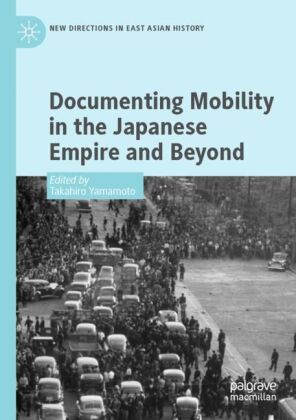
This book tackles the question of border control in and around imperial Japan in the first half of the twentieth century, with a specific focus on its documentation regime.
It explores the institutional development, media and literary discourses, and on[1]the-ground practices of documentary identification in the Japanese empire and the places visited by its subjects. The contributing authors, covering such regions as Korea, Manchuria, Taiwan, Siberia, Australia, and the United States, place the question of individual identity in the eyes of the respective governments in dialogue with the global developments of the identification and mobility control practices. The chapters suggest the importance of focusing more than previously on the narrative of individual identification, not as a tool for creating nation states but as a tool for generating, strengthening, and maintaining asymmetrical relationships between people of different socioeconomic backgrounds who moved in and out of empires.
This book joins the effort in the recent scholarship in migration history to highlight experiences of migrants beyond the transatlantic world, and that in East Asian history to investigate the space and connections beyond the boundaries of the nation states. By bringing together the analyses on the trans-Pacific mobility and Japan's imperial expansion and its aftermath in East Asia, it shows a complex interplay between state power and moving individuals, two forces whose relationships went far beyond simple competition.