






Diese Website verwendet Cookies und ähnliche Technologien. Dabei handelt es sich um kleine Textdateien, die auf eurem Computer gespeichert und ausgelesen werden. Indem ihr auf "Alles akzeptieren" klickt, stimmt ihr der Verarbeitung von Daten, der Erstellung und Verarbeitung von individuellen Nutzungsprofilen über Websites und über Partner und Geräte hinweg sowie der Übermittlung eurer Daten an Drittanbieter zu, die eure Daten teilweise in Ländern außerhalb der Europäischen Union verarbeiten (GDPR Art. 49). Einzelheiten hierzu findet ihr in den Datenschutzhinweisen. Die Daten werden für Analysen und für eigene Zwecke Dritter verwendet. Weitere Informationen, auch über die Datenverarbeitung durch Drittanbieter und die Möglichkeit des Widerrufs, findet ihr in den Einstellungen und in unseren Datenschutzhinweisen. Hier könnt ihr mit den notwendigen Tools fortfahren.
- Verlag: Springer, Berlin
- Autor: Shao Long
- Artikel-Nr.: KNV96987006
- ISBN: 9789819982912
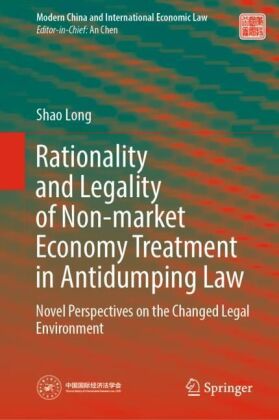
This book serves as a comprehensive study of and provides rich insight into non-market economy treatment, including its past, present, and estimated future practices and implications. It explores the introduction of the market and non-market economy dichotomy into international trade law. It traces the origin and development of non-market economy treatment against changing international economic and political background. The book examines this treatment in light of the rationale underlying anti-dumping, reflecting its alleged significance of ensuring fair trade. It in particular investigates the varied non-market economy treatment practices responding concerns of China's rising as a large state-led economy, analyzing the deviation of NME treatment into an all-in trade tool. The book argues against preconceived bias and unilateral protectionism. It highlights the universal existence of government involvement in the market and proposes objective assessment of its impact on fair trade.Final proposition of the book is depoliticizing trade, reforming comprehensively international trade rules to carefully calibrate different values, including promoting fairness and enhancing global social welfare. It envisages a multi-dimension overhaul of international trade rules to rebalance trade interests, rather than roughly labeling an economy to confer different treatment, the practices of which lead to separation and chaos. The book is of particular relevance and interest to economies-in-transition, and among policy makers, academicians and legal practitioners engaged in trade remedies and trade rules reconstruction.