






Diese Website verwendet Cookies und ähnliche Technologien. Dabei handelt es sich um kleine Textdateien, die auf eurem Computer gespeichert und ausgelesen werden. Indem ihr auf "Alles akzeptieren" klickt, stimmt ihr der Verarbeitung von Daten, der Erstellung und Verarbeitung von individuellen Nutzungsprofilen über Websites und über Partner und Geräte hinweg sowie der Übermittlung eurer Daten an Drittanbieter zu, die eure Daten teilweise in Ländern außerhalb der Europäischen Union verarbeiten (GDPR Art. 49). Einzelheiten hierzu findet ihr in den Datenschutzhinweisen. Die Daten werden für Analysen und für eigene Zwecke Dritter verwendet. Weitere Informationen, auch über die Datenverarbeitung durch Drittanbieter und die Möglichkeit des Widerrufs, findet ihr in den Einstellungen und in unseren Datenschutzhinweisen. Hier könnt ihr mit den notwendigen Tools fortfahren.
- Verlag: Springer, Berlin
- Autor: John T. Van Stan II
- Artikel-Nr.: KNV97009752
- ISBN: 9783031497674
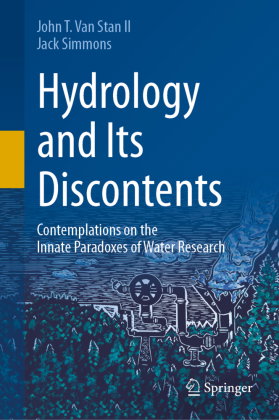
This book examines the intricate web linking water science and society using diverse philosophical lenses. Highlighting the tensions within the threads of this web, we spotlight major conceptual tightropes that water researchers tread daily. To effectively navigate these delicate threads, a 'healthy' tension in the encompassing web is necessary. Drawing inspiration from Freud's examination of tensions in "Society and Its Discontents," we illuminate the tension-filled paradoxes inherent to water science, emphasizing the challenges in keeping these paradoxical threads taut enough to ensure a navigable and sustainable bond with society.
Central to our narrative is the escalating societal urge to quantify and 'manage' water-something interwoven throughout every environmental layer, including the fabric of our being. An excessive focus on management may alienate users from their water realities, jeopardizing the vital threads that sustainability tether water science and society. Consequently, this book explores compelling and inescapable tensions that resist tidy universal resolution, such as: the language of water science, including its mathematical reductions (i.e., models); the effect of water's commodification on its science; hydrology's intersection with colonialism; and other concerns that reveal distortions in our hydrology.
We aim to aid water professionals in recognizing and fine-tuning the paradoxes intrinsic to their work. To underscore the interwoven complexity of contemporary hydrology, "Hydrology and Its Discontents" guides readers into the tempestuous depths of water research, all the while urging a recalibration of perspectives and motivations.