






Diese Website verwendet Cookies und ähnliche Technologien. Dabei handelt es sich um kleine Textdateien, die auf eurem Computer gespeichert und ausgelesen werden. Indem ihr auf "Alles akzeptieren" klickt, stimmt ihr der Verarbeitung von Daten, der Erstellung und Verarbeitung von individuellen Nutzungsprofilen über Websites und über Partner und Geräte hinweg sowie der Übermittlung eurer Daten an Drittanbieter zu, die eure Daten teilweise in Ländern außerhalb der Europäischen Union verarbeiten (GDPR Art. 49). Einzelheiten hierzu findet ihr in den Datenschutzhinweisen. Die Daten werden für Analysen und für eigene Zwecke Dritter verwendet. Weitere Informationen, auch über die Datenverarbeitung durch Drittanbieter und die Möglichkeit des Widerrufs, findet ihr in den Einstellungen und in unseren Datenschutzhinweisen. Hier könnt ihr mit den notwendigen Tools fortfahren.
- Verlag: Springer, Berlin
- Autor: Jorge Chica-Olmo
- Artikel-Nr.: KNV97010139
- ISBN: 9783031495359
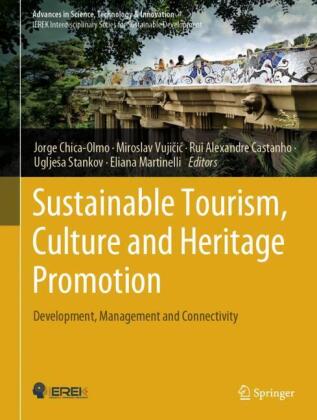
This proceedings book explores future prospects of cultural, heritage, and religious tourism and how it can impact the socioeconomic complexity of a community and future developments. It includes chapters on contemporary digital age pilgrimage, digital interpretation as a management strategy, tourism in the era of digital communication, and the role of social media in conserving intangible cultural heritage.
This book focuses on policies and mechanisms for heritage preservation. It includes cultural heritage tourism management, how the digitalization of data has impacted and further developed tourism, World Heritage classification in urban tourism destinations, cultural tourism products, and experiences. Moreover, it discusses the sustainable environment and geography in tourism. It covers topics such as ecotourism and rural sustainable development, heritage in socioeconomic sustainable development, and tourists' perceptions of tourism.
Anotherpart of the book explores the social and economic impacts of tourism. It includes chapters on cycling tourism along the Elbe, residents' perceptions of the socioeconomic benefits of restaurants, architecture of historical mosques, tourism as a driver of soft power, tourists' perceptions of service quality, tourism during the Covid-19 pandemic, gastronomic narratives in tourism, and residents' perceptions of festivals. Also, it pinpoints the focus on user interaction-based development. It includes chapters on the role of community-led initiatives in heritage revitalization and addressing connectivity issues between historical and natural touristic heritage sites.
These research papers provide valuable insights into the multidimensional nature of cultural sustainable tourism, covering a wide range of topics and offering diverse perspectives on its development, management, and impact.