






Diese Website verwendet Cookies und ähnliche Technologien. Dabei handelt es sich um kleine Textdateien, die auf eurem Computer gespeichert und ausgelesen werden. Indem ihr auf "Alles akzeptieren" klickt, stimmt ihr der Verarbeitung von Daten, der Erstellung und Verarbeitung von individuellen Nutzungsprofilen über Websites und über Partner und Geräte hinweg sowie der Übermittlung eurer Daten an Drittanbieter zu, die eure Daten teilweise in Ländern außerhalb der Europäischen Union verarbeiten (GDPR Art. 49). Einzelheiten hierzu findet ihr in den Datenschutzhinweisen. Die Daten werden für Analysen und für eigene Zwecke Dritter verwendet. Weitere Informationen, auch über die Datenverarbeitung durch Drittanbieter und die Möglichkeit des Widerrufs, findet ihr in den Einstellungen und in unseren Datenschutzhinweisen. Hier könnt ihr mit den notwendigen Tools fortfahren.
- Verlag: Springer, Berlin
- Autor: Shijun J. Zheng
- Artikel-Nr.: KNV97016820
- ISBN: 9789819989287
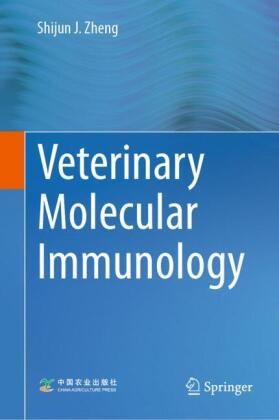
This book focuses primarily on the newly discovered theory and techniques of veterinary molecular immunology. It also covers application of modern immunological methods into the treatment and control of infectious diseases and cancer, and future research trends. In terms of new immunological theories, this book focuses on recently-discovered innate lymphocytes (ILCs), signal transduction triggered by engagement of pattern recognition receptors (PRRs) with pathogen-associated molecular patterns (PAMPs), and signal communication between nerve and immune systems, antimicrobial peptides, immunoregulation and checkpoint, development and maturation of T and B lymphocytes, regulatory T cells, immune tolerance, and immunosuppression and evasion. In terms of new techniques and application, the book covers the categories and designs of preventive and therapeutic vaccines and the principle of developing vaccination program, occurrence, development and immune evasion of cancer cells, and the novel techniques for cancer therapy. In addition, comparison of avian and porcine cytokines with human and mouse ones is also provided in the appendices to illustrate the differences in cytokines between species. This book is valuable for the undergraduates, graduate students or professional researchers with requirement for advanced studies in veterinary immunology. It meets their requirements for improving and expanding knowledge of immunology.