






Diese Website verwendet Cookies und ähnliche Technologien. Dabei handelt es sich um kleine Textdateien, die auf eurem Computer gespeichert und ausgelesen werden. Indem ihr auf "Alles akzeptieren" klickt, stimmt ihr der Verarbeitung von Daten, der Erstellung und Verarbeitung von individuellen Nutzungsprofilen über Websites und über Partner und Geräte hinweg sowie der Übermittlung eurer Daten an Drittanbieter zu, die eure Daten teilweise in Ländern außerhalb der Europäischen Union verarbeiten (GDPR Art. 49). Einzelheiten hierzu findet ihr in den Datenschutzhinweisen. Die Daten werden für Analysen und für eigene Zwecke Dritter verwendet. Weitere Informationen, auch über die Datenverarbeitung durch Drittanbieter und die Möglichkeit des Widerrufs, findet ihr in den Einstellungen und in unseren Datenschutzhinweisen. Hier könnt ihr mit den notwendigen Tools fortfahren.
- Verlag: Springer, Berlin
- Autor: Christian Wolkersdorfer
- Artikel-Nr.: KNV97042355
- ISBN: 9783662657720
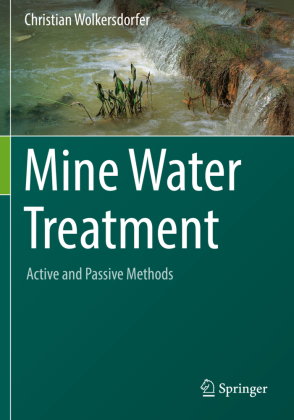
This book accompanies you on a journey that starts with the basics of mine water treatment and takes you further through correct sampling for planning to active and passive systems. In the respective chapters you will learn the most important techniques about the parameters to be measured (e.g. on-site parameters, flow rate), which methods are available to actively treat your mine water (e.g. high density sludge method, reverse osmosis, ion exchange) and which ones to perform passive treatment (e.g. constructed wetlands, vertical flow reactor, limestone channel). You will also get an insight into the use of mine water. Don't expect a cookbook - rather, it's an ingredients and utensils list to help you find the right recipe. For extended help on this, check out the more than 1000 references on all the techniques presented. I wrote this book for hydrogeologists, engineers, graduate students, government officials, miners, geoecologists, chemical engineers - in the broadest sense: you.
This book is a translation of an original German edition. The translation was done with the help of artificial intelligence (machine translation by the service DeepL.com). A subsequent human revision and a thorough copy editing and update by the author ensured that the contents are correctly represented.