






Diese Website verwendet Cookies und ähnliche Technologien. Dabei handelt es sich um kleine Textdateien, die auf eurem Computer gespeichert und ausgelesen werden. Indem ihr auf "Alles akzeptieren" klickt, stimmt ihr der Verarbeitung von Daten, der Erstellung und Verarbeitung von individuellen Nutzungsprofilen über Websites und über Partner und Geräte hinweg sowie der Übermittlung eurer Daten an Drittanbieter zu, die eure Daten teilweise in Ländern außerhalb der Europäischen Union verarbeiten (GDPR Art. 49). Einzelheiten hierzu findet ihr in den Datenschutzhinweisen. Die Daten werden für Analysen und für eigene Zwecke Dritter verwendet. Weitere Informationen, auch über die Datenverarbeitung durch Drittanbieter und die Möglichkeit des Widerrufs, findet ihr in den Einstellungen und in unseren Datenschutzhinweisen. Hier könnt ihr mit den notwendigen Tools fortfahren.
- Verlag: Bloomsbury Trade
- Autor: Philip Bowring
- Artikel-Nr.: KNV97066551
- ISBN: 9781350427884
"Well-researched... a welcome guide." The Spectator
"Reliable and lucid." History Today
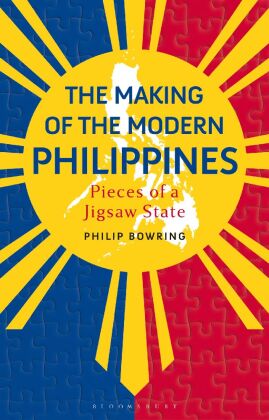
With a fractured geography and complex identity, The Philippines is an eclectic and unique mix of culture, environment, people and politics. Known mostly for natural disasters, migrant labour and dictatorial presidents, in this book Philip Bowing shows how it is much, much more. Deftly navigating the history of this populous island republic, The Making of the Modern Philippines traces its history to define and explain its position in the modern world. Looking past the headlines of volcanoes, earthquakes and violence, it asks why has the Filipino economy lagged behind its neighbours, explores the importance of its location in geopolitics, and investigates how its deep-rooted Catholicism clashes with the Islamic consciousness of the region in which it sits.
Taking the history of the Philippines from its pre-colonial era, through its Spanish and American occupations and up to the modern day, it unravels the complex politics, culture, peoples and economy of this rich and unique nation. Engaging with challenges the Filipino people face today such as federalism, revolution, Mindanao, the diaspora, capitalism and relations with China, it rediscovers the struggles, culture and history of its past to understand the present.