






Diese Website verwendet Cookies und ähnliche Technologien. Dabei handelt es sich um kleine Textdateien, die auf eurem Computer gespeichert und ausgelesen werden. Indem ihr auf "Alles akzeptieren" klickt, stimmt ihr der Verarbeitung von Daten, der Erstellung und Verarbeitung von individuellen Nutzungsprofilen über Websites und über Partner und Geräte hinweg sowie der Übermittlung eurer Daten an Drittanbieter zu, die eure Daten teilweise in Ländern außerhalb der Europäischen Union verarbeiten (GDPR Art. 49). Einzelheiten hierzu findet ihr in den Datenschutzhinweisen. Die Daten werden für Analysen und für eigene Zwecke Dritter verwendet. Weitere Informationen, auch über die Datenverarbeitung durch Drittanbieter und die Möglichkeit des Widerrufs, findet ihr in den Einstellungen und in unseren Datenschutzhinweisen. Hier könnt ihr mit den notwendigen Tools fortfahren.
- Verlag: Bloomsbury Trade
- Autor: Slavoj Zizek
- Artikel-Nr.: KNV97066550
- ISBN: 9781350409316
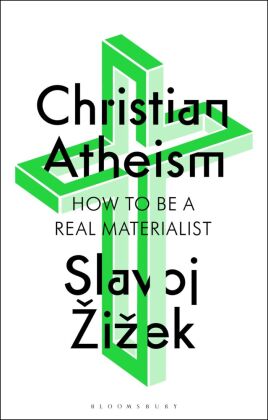
If we want to be true atheists, do we have to begin with a religious edifice and undermine it from within?
Slavoj Zizek has long been a commentator on, and critic of, Christian theology. His preoccupation with Badiou's concept of 'the event' alongside the Pauline thought of the New Testament has led to a decidedly theological turn in his thinking. Drawing on traditions and subjects as broad as Buddhist thought, dialectical materialism, political subjectivity, quantum physics, AI and chatbots, this book articulates Zizek's idea of a religious life for the first time.
Christian Atheism is a unique insight into Zizek's theological project and the first book-length exploration of his religious thinking. In his own words, "to become a true dialectical materialist, one should go through the Christian experience." Crucial to his whole conception of 'experience' is not some kind of spiritual revelation but rather the logic of materialistic thought. This affirmation of Christian theology whilst simultaneously deconstructing it is a familiar Zizekian move, but one that holds deep-seated political, philosophical and, in the end, personal import for him.
Here is Zizek's most extensive treatment of theology and religion to date.