






Diese Website verwendet Cookies und ähnliche Technologien. Dabei handelt es sich um kleine Textdateien, die auf eurem Computer gespeichert und ausgelesen werden. Indem ihr auf "Alles akzeptieren" klickt, stimmt ihr der Verarbeitung von Daten, der Erstellung und Verarbeitung von individuellen Nutzungsprofilen über Websites und über Partner und Geräte hinweg sowie der Übermittlung eurer Daten an Drittanbieter zu, die eure Daten teilweise in Ländern außerhalb der Europäischen Union verarbeiten (GDPR Art. 49). Einzelheiten hierzu findet ihr in den Datenschutzhinweisen. Die Daten werden für Analysen und für eigene Zwecke Dritter verwendet. Weitere Informationen, auch über die Datenverarbeitung durch Drittanbieter und die Möglichkeit des Widerrufs, findet ihr in den Einstellungen und in unseren Datenschutzhinweisen. Hier könnt ihr mit den notwendigen Tools fortfahren.
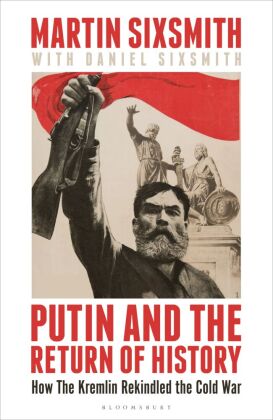
- Verlag: Bloomsbury Trade
- Autor: Martin Sixsmith
- Artikel-Nr.: KNV97066559
- ISBN: 9781399409872
An original history of Russia's thousand-year past, tracing the forces and the myths that have shaped Putin's politics and rekindled the Cold War.
Vladimir Putin's invasion of Ukraine has reshaped history. In the decades after the collapse of Soviet communism, the West convinced itself that liberal democracy would henceforth be the dominant, ultimately unique, system of governance - a hubris that shaped how the West would treat Russia for the next two decades. But history wasn't over.
Putin is a paradox. In the early years of his presidency, he appeared to commit himself to friendship with the West, suggesting that Russia could join the European Union or even NATO. He said he supported free-market democracy and civil rights. But the Putin of those years is unrecognisable today. The Putin of the 2020s is an autocratic nationalist, dedicated to repression at home and anti-Western militarism abroad. So, what happened? Was he lying when he proclaimed his support for freedom, democracy and friendship with the West? Or, was he sincere? Did he change his views at some stage between then and now? And if that is the case, what happened to change him?
Putin and the Return of History examines these questions in the context of Russia's thousand-year past, tracing the forces and the myths that have shaped Putin's politics of aggression: the enduring terror of encirclement by outsiders, the subjugation of the individual to the cause of the state, the collectivist values that allow the sacrifice of human lives in battle, the willingness to lie and deceive, the co-opting of religion and the belief in Great Russia's mission to change the world.