






Diese Website verwendet Cookies und ähnliche Technologien. Dabei handelt es sich um kleine Textdateien, die auf eurem Computer gespeichert und ausgelesen werden. Indem ihr auf "Alles akzeptieren" klickt, stimmt ihr der Verarbeitung von Daten, der Erstellung und Verarbeitung von individuellen Nutzungsprofilen über Websites und über Partner und Geräte hinweg sowie der Übermittlung eurer Daten an Drittanbieter zu, die eure Daten teilweise in Ländern außerhalb der Europäischen Union verarbeiten (GDPR Art. 49). Einzelheiten hierzu findet ihr in den Datenschutzhinweisen. Die Daten werden für Analysen und für eigene Zwecke Dritter verwendet. Weitere Informationen, auch über die Datenverarbeitung durch Drittanbieter und die Möglichkeit des Widerrufs, findet ihr in den Einstellungen und in unseren Datenschutzhinweisen. Hier könnt ihr mit den notwendigen Tools fortfahren.
- Verlag: Springer, Berlin
- Autor: Anna Trono
- Artikel-Nr.: KNV97071996
- ISBN: 9783031520402
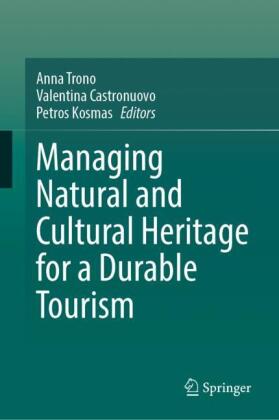
This contributed volume offers a wealth of cases that explore the factors and conditions required for heritage tourism to be economically and socially beneficial to local communities without impairing the natural environment, cultural heritage preservation, or sustainability for future generations. The studies presented here comprise an examination of measures which have been and can be implemented to ensure sustainable use of natural and cultural systems, leading to a new concept of tourism that incorporates science and community practices together to create a favorable environment where tourists and locals can experience meaningful interactions and experiences.
The book focuses on the role of stakeholders in the development of a new policy regarding the sustainable management of cultural tourism and the possibility of their involvement in the processes governing policy-making. Emphasis is placed on the role and commitment of local and international authorities, including UNESCO, in preserving the world's endangered cultural and natural heritage, as well as the responsibilities of Member States and public and private actors with respect to future conservation challenges.