






Diese Website verwendet Cookies und ähnliche Technologien. Dabei handelt es sich um kleine Textdateien, die auf eurem Computer gespeichert und ausgelesen werden. Indem ihr auf "Alles akzeptieren" klickt, stimmt ihr der Verarbeitung von Daten, der Erstellung und Verarbeitung von individuellen Nutzungsprofilen über Websites und über Partner und Geräte hinweg sowie der Übermittlung eurer Daten an Drittanbieter zu, die eure Daten teilweise in Ländern außerhalb der Europäischen Union verarbeiten (GDPR Art. 49). Einzelheiten hierzu findet ihr in den Datenschutzhinweisen. Die Daten werden für Analysen und für eigene Zwecke Dritter verwendet. Weitere Informationen, auch über die Datenverarbeitung durch Drittanbieter und die Möglichkeit des Widerrufs, findet ihr in den Einstellungen und in unseren Datenschutzhinweisen. Hier könnt ihr mit den notwendigen Tools fortfahren.
- Verlag: Springer, Berlin
- Autor: José M. García-Ruiz
- Artikel-Nr.: KNV97071969
- ISBN: 9783031519543
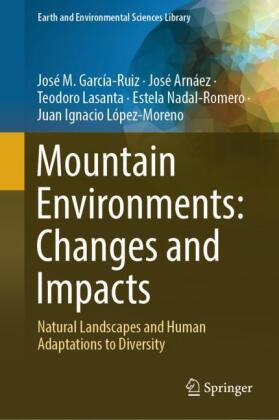
This book studies mountains with a global perspective, like a complex topographic and topoclimatic mosaic organized in altitudinal belts that are influenced by a huge variability in slopes, soils, lithology and insolation. Furthermore, the presence of lower temperatures, higher precipitation and the seasonal presence of snow create conditions conductive to supporting various life forms and natural geomorphological and hydrological processes. The integration of environmental and human aspects highlights the impacts of human activities and climate fluctuations on soil hydrology, soil erosion, water resources, and landscape/landforms evolution. After presenting the way in which humans (from Prehistory to Alexander von Humboldt) discovered the mountains, subsequent chapters try to underline the importance of mountains in generating water resources and hydropower for lowlands, serving as biodiversity hotspots, and contributing to cultural diversity. The book delves into the role ofhuman actives in transforming the natural landscapes and creating new cultural landscapes. This exploration considers the significance of altitudinal belts in shaping the spatial and temporal organization of land uses which, in turn, have been determined by population growth and the development of regional and national markets. Additionally, the book illustrates the effect of global change on mountain evolution, exploring their consequences on landscape characteristics and dynamics as well as on the planetary role of the mountains. It concludes by offering a unique perspective on enhancing mountain conservation in order to preserve cultures, land uses, and landscapes.