






Diese Website verwendet Cookies und ähnliche Technologien. Dabei handelt es sich um kleine Textdateien, die auf eurem Computer gespeichert und ausgelesen werden. Indem ihr auf "Alles akzeptieren" klickt, stimmt ihr der Verarbeitung von Daten, der Erstellung und Verarbeitung von individuellen Nutzungsprofilen über Websites und über Partner und Geräte hinweg sowie der Übermittlung eurer Daten an Drittanbieter zu, die eure Daten teilweise in Ländern außerhalb der Europäischen Union verarbeiten (GDPR Art. 49). Einzelheiten hierzu findet ihr in den Datenschutzhinweisen. Die Daten werden für Analysen und für eigene Zwecke Dritter verwendet. Weitere Informationen, auch über die Datenverarbeitung durch Drittanbieter und die Möglichkeit des Widerrufs, findet ihr in den Einstellungen und in unseren Datenschutzhinweisen. Hier könnt ihr mit den notwendigen Tools fortfahren.
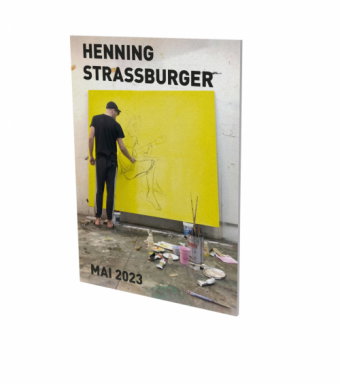
- Verlag: Snoeck
- Autor: Bruno Brunnet
- Artikel-Nr.: KNV96483026
- ISBN: 9783864424175
Dana Z aja: In preparation for this conversation, I had read texts about your work and found this sentence from the catalog for your first exhibition with us: »Strassburger integrates the existing reality material as part of a specific contemporary moment. Everything is recorded, linked together and continued: existential fear, fun culture, and fulfillment of lust.« When I thought about it, the first question for me was what reality even means to you?
Henning Strassburger: I like »existential fear, fun culture and fulfillment of lust« quite a bit. More reality than that is hardly possible. But I wouldn't exactly consider myself an expert on reality and its meanings.
DZ: In your notes on painting you write about abstraction: »The perfect abstract pain- ting is achieved when it has become a wallpaper«. Do you mean that in a negative sense? Then why did you paint abstractly for so long? And why not anymore?
HS: I achieved the wallpaper status last year, and I say that with satisfaction. Mission accomplished. But the desire to continue doing this as a trademark art and safe cash cow was really limited for me. I have colleagues who are better at it and raise it as big busi- ness. But I wanted to go back out into the adventure. In the last abstract painting for the time being I put everything I had into it and then closed the door for myself. I really don't want to paint the same painting every day.
DZ: Your obsession with pools and splashes gets a melancholic touch in its figurative instance, which in turn is broken by the color palette typical for you.
HS: I like to work my way through the topic, there is a lot here. I added the figure as a problem. I have the feeling that it critically looks at my painting while I am painting it. Maybe shaking its head, no idea. I can juxtapose the figures with a painting to which they have to take a position. They may also buckle a little or be overwhelmed in front of it. In any case, it gives me room to maneuver. I had exhausted that for myself with the abstract paintings.
DZ: »As long as mankind can see, there will be painting.« On the one hand, it seems as if you want the viewer to see themselves or even to immerse themselves in your paintings. On the other hand, you often mix your colors with white to keep the images flat. Is it important to you that a painting is perceived in its mediality? Or should they rather trigger self-reflection in the viewer?
HS: That sounds super esoteric. But of course, the aim of painting should be that someone takes a look at it. And flatness is the domain of paint