






Diese Website verwendet Cookies und ähnliche Technologien. Dabei handelt es sich um kleine Textdateien, die auf eurem Computer gespeichert und ausgelesen werden. Indem ihr auf "Alles akzeptieren" klickt, stimmt ihr der Verarbeitung von Daten, der Erstellung und Verarbeitung von individuellen Nutzungsprofilen über Websites und über Partner und Geräte hinweg sowie der Übermittlung eurer Daten an Drittanbieter zu, die eure Daten teilweise in Ländern außerhalb der Europäischen Union verarbeiten (GDPR Art. 49). Einzelheiten hierzu findet ihr in den Datenschutzhinweisen. Die Daten werden für Analysen und für eigene Zwecke Dritter verwendet. Weitere Informationen, auch über die Datenverarbeitung durch Drittanbieter und die Möglichkeit des Widerrufs, findet ihr in den Einstellungen und in unseren Datenschutzhinweisen. Hier könnt ihr mit den notwendigen Tools fortfahren.
- Verlag: Simon & Schuster US
- Autor: Daniel Lewis
- Artikel-Nr.: KNV97114586
- ISBN: 9781982164058
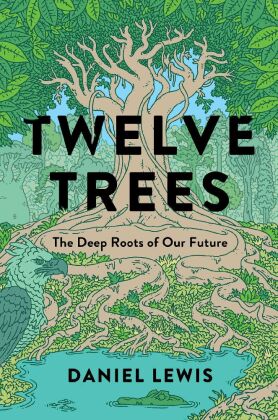
The world today is undergoing the most rapid environmental transformation in human history-from climate change to deforestation. Scientists, ethnobotanists, indigenous peoples, and collectives of all kinds are closely studying trees and their biology to understand how and why trees function individually and collectively in the ways they do. In Twelve Trees, Daniel Lewis, curator and historian at one of the world's most renowned research libraries, travels the world to learn about these trees in their habitats.
Lewis takes us on a sweeping journey to plant breeding labs, botanical gardens, research facilities, deep inside museum collections, to the tops of tall trees, underwater, and around the Earth, journeying into the deserts of the American west and the deep jungles of Peru, to offer a globe-spanning perspective on the crucial impact trees have on our entire planet. When a once-common tree goes extinct in the wild but survives in a botanical garden, what happens next? How can scientists reconstruct lost genomes and habitats? How does a tree store thousands of gallons of water, or offer up perfectly preserved insects from millions of years ago, or root itself in muddy swamps and remain standing? How does a 5,000-year-old tree manage to live, and what can we learn from it? And how can science account for the survival of one species at the expense of others? Twelve Trees "brims with wonder, appreciation, and even some small hope" (Booklist) and is an awe-inspiring story of our world, its past, and its future.
Note-species include: * The Lost Tree of Easter Island (Sophora toromiro) * The coast redwood (Sequoia sempervirens) * Hymenaea protera [a fossil tree] * The Longleaf pine (Pinus palustris) * East Indian sandalwood (Santanum album) * The Bristlecone pine (Pinus longaeva) * West African ebony (Diospyros crassiflora) * The Tasmanian blue gum eucalyptus (Eucalyptus globulus) * Olive tree (Olea europaea) * Baobab (Adansonia digitata) * the kapok tree (Ceiba pentandra) * The bald cypress (Taxodium distichum)