






Diese Website verwendet Cookies und ähnliche Technologien. Dabei handelt es sich um kleine Textdateien, die auf eurem Computer gespeichert und ausgelesen werden. Indem ihr auf "Alles akzeptieren" klickt, stimmt ihr der Verarbeitung von Daten, der Erstellung und Verarbeitung von individuellen Nutzungsprofilen über Websites und über Partner und Geräte hinweg sowie der Übermittlung eurer Daten an Drittanbieter zu, die eure Daten teilweise in Ländern außerhalb der Europäischen Union verarbeiten (GDPR Art. 49). Einzelheiten hierzu findet ihr in den Datenschutzhinweisen. Die Daten werden für Analysen und für eigene Zwecke Dritter verwendet. Weitere Informationen, auch über die Datenverarbeitung durch Drittanbieter und die Möglichkeit des Widerrufs, findet ihr in den Einstellungen und in unseren Datenschutzhinweisen. Hier könnt ihr mit den notwendigen Tools fortfahren.
- Verlag: Springer, Berlin
- Autor: Lee Smith
- Artikel-Nr.: KNV97125875
- ISBN: 9783031210310
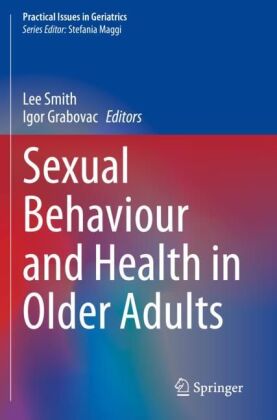
This book provides a comprehensive overview for those interested in research and promoting sexual health in older people, as well as a "go-to" guide on the topic of sexual behaviour in older adults.
Sexual activity is an essential part of intimate relationships, though it tends to decline in frequency as people grow older. Nevertheless, for many older people, sex still remains an important part of their life. There's a common misconception that as people age, they lose their interest in sex and capacity for sexual behaviour. This is not the case, as a number of national surveys show.
The new research presented here indicates that the less sex older people have, the more likely they are to experience mental and physical health problems. Men and women who reported a decrease in the frequency of sexual activities were also more likely to report a deterioration in self-perceived health. Additionally, men with erectile dysfunction were also more likely to be diagnosed with cancer or coronary heart disease. This research has also determined that older adults who experience a decline in sexual activity report poorer well-being than those who maintain their levels of sexual desire, activity and function in later life, and that men who remain sexually active in later life continue to have better cognitive performance compared to those who don't. Despite these health benefits, medical professionals do little to promote sexual activity in older adults, and the literature suggests that there is a lack of knowledge on how to approach the subject and how to promote such activities.
This is the first comprehensive book specifically exploring all areas of sexual behaviour and health in older adults, and drawing on the latest research in this area. It offers a valuable resource for researchers and clinicians in various health fields (medicine, nursing, occupational therapy, psychology, public health, etc.), as well as students in undergraduate and graduate programs.