






Diese Website verwendet Cookies und ähnliche Technologien. Dabei handelt es sich um kleine Textdateien, die auf eurem Computer gespeichert und ausgelesen werden. Indem ihr auf "Alles akzeptieren" klickt, stimmt ihr der Verarbeitung von Daten, der Erstellung und Verarbeitung von individuellen Nutzungsprofilen über Websites und über Partner und Geräte hinweg sowie der Übermittlung eurer Daten an Drittanbieter zu, die eure Daten teilweise in Ländern außerhalb der Europäischen Union verarbeiten (GDPR Art. 49). Einzelheiten hierzu findet ihr in den Datenschutzhinweisen. Die Daten werden für Analysen und für eigene Zwecke Dritter verwendet. Weitere Informationen, auch über die Datenverarbeitung durch Drittanbieter und die Möglichkeit des Widerrufs, findet ihr in den Einstellungen und in unseren Datenschutzhinweisen. Hier könnt ihr mit den notwendigen Tools fortfahren.
- Verlag: De Gruyter
- Autor: Sarah Perez
- Artikel-Nr.: KNV97175568
- ISBN: 9783110991055
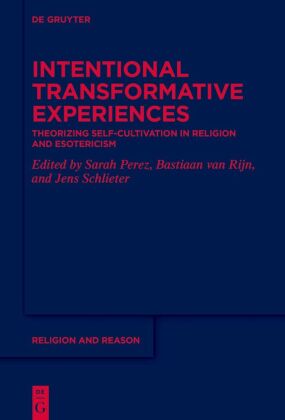
This book offers new theoretical insights into religious, esoteric, and philosophical practices and narratives that deal with "intentional transformative experiences." Exceptional life-changing experiences are often believed to be beyond the individual's control-they are thought to "simply happen." However, many individuals actively and self-reflectively search for transformative experiences.
Intentional Transformative Experiences provides analyses of such intentionally sought experiences in different spiritual, religious, and esoteric milieus. Case studies range from South and Central Asian traditions to Western esoteric practices, compare autobiographical narratives of self-cultivation, and explore attempts to systematize intentional transformative experiences.
Next to applying established theoretical frameworks, such as the cognitive science of religion and philosophy, this volume also includes considerations on subsets of transformative experiences such as the dichotomy of intentionality and unintentionality, risk and failure, as well as the transformation of others instead of one's own self. The result is an important contribution for researchers who deal with narratives or practices that include "transformative experiences."