






Diese Website verwendet Cookies und ähnliche Technologien. Dabei handelt es sich um kleine Textdateien, die auf eurem Computer gespeichert und ausgelesen werden. Indem ihr auf "Alles akzeptieren" klickt, stimmt ihr der Verarbeitung von Daten, der Erstellung und Verarbeitung von individuellen Nutzungsprofilen über Websites und über Partner und Geräte hinweg sowie der Übermittlung eurer Daten an Drittanbieter zu, die eure Daten teilweise in Ländern außerhalb der Europäischen Union verarbeiten (GDPR Art. 49). Einzelheiten hierzu findet ihr in den Datenschutzhinweisen. Die Daten werden für Analysen und für eigene Zwecke Dritter verwendet. Weitere Informationen, auch über die Datenverarbeitung durch Drittanbieter und die Möglichkeit des Widerrufs, findet ihr in den Einstellungen und in unseren Datenschutzhinweisen. Hier könnt ihr mit den notwendigen Tools fortfahren.
- Verlag: Park Books
- Autor: Caroline Voet
- Artikel-Nr.: KNV97399345
- ISBN: 9783038603764
Today, Dom Hans van der Laan (1904-91) is something of a cult figure of European post-World War II architecture. The Dutch Benedictine monk and architect dedicated his life to the search for fundamental principles of architecture, and his thoughts on numerical relationships and dimensional systems were highly influential in mid-twentieth-century architectural theory.
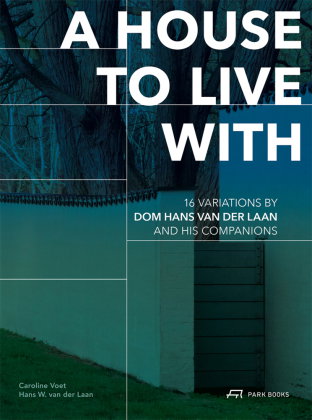
A House to Live With is the first book to comprehensively explore the residential buildings designed by Van der Laan and some of his students in the Ecclesiastical Architecture course in in s-Hertogenbosch, which he directed between 1946 and 1973. 16 of them, built between 1966 and 1985, are featured in full detail through photographs and plans newly produced for this book, and analyzed with regard to their compositional and design principles. Essays examine the mathematical relationships of numbers and volumes that are fundamental to van der Laan's designs, alongside discussion of how he was influenced by ancient Roman architecture. Light is shed also on the interplay of house and garden and house and patio, and the positioning of the one large table in the house, which to van der Laan was of key significance.
Thoroughly researched and highly readable, this volume introduces Hans van der Laan's architectural ideas and housing designs in full, thus forming a rich and useful source for contemporary architects.