






Diese Website verwendet Cookies und ähnliche Technologien. Dabei handelt es sich um kleine Textdateien, die auf eurem Computer gespeichert und ausgelesen werden. Indem ihr auf "Alles akzeptieren" klickt, stimmt ihr der Verarbeitung von Daten, der Erstellung und Verarbeitung von individuellen Nutzungsprofilen über Websites und über Partner und Geräte hinweg sowie der Übermittlung eurer Daten an Drittanbieter zu, die eure Daten teilweise in Ländern außerhalb der Europäischen Union verarbeiten (GDPR Art. 49). Einzelheiten hierzu findet ihr in den Datenschutzhinweisen. Die Daten werden für Analysen und für eigene Zwecke Dritter verwendet. Weitere Informationen, auch über die Datenverarbeitung durch Drittanbieter und die Möglichkeit des Widerrufs, findet ihr in den Einstellungen und in unseren Datenschutzhinweisen. Hier könnt ihr mit den notwendigen Tools fortfahren.
- Verlag: Simon & Schuster US
- Autor: Jeremy Kahn
- Artikel-Nr.: KNV97256007
- ISBN: 9781668065334
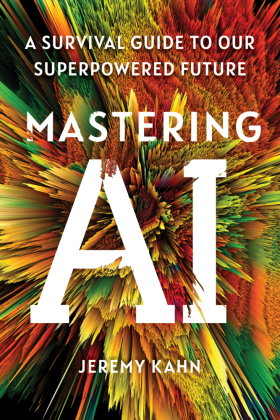
Within the next five years, Jeremy Kahn predicts, AI will disrupt almost every industry and enterprise, with vastly increased efficiency and productivity. It will restructure the workforce, making AI copilots a must for every knowledge worker. It will revamp education, meaning children around the world can have personal, portable tutors. It will revolutionize health care, making individualized, targeted pharmaceuticals more affordable. It will compel us to reimagine how we make art, compose music, and write and publish books. The potential of generative AI to extend our skills, talents, and creativity as humans is undeniably exciting and promising.
But while this new technology has a bright future, it also casts a dark and fearful shadow. AI will provoke pervasive, disruptive, potentially devastating knock-on effects. Leveraging his unrivaled access to the leaders, scientists, futurists, and others who are making AI a reality, Kahn will argue that if not carefully designed and vigilantly regulated AI will deepen income inequality, depressing wages while imposing winner-take-all markets across much of the economy. AI risks undermining democracy, as truth is overtaken by misinformation, racial bias, and harmful stereotypes. Continuing a process begun by the internet, AI will rewire our brains, likely inhibiting our ability to think critically, to remember, and even to get along with one another-unless we all take decisive action to prevent this from happening.
Much as Michael Lewis's classic The New New Thing offered a prescient, insightful, and eminently readable account of life inside the dot-com bubble, Mastering AI delivers much-needed guidance for anyone eager to understand the AI boom-and what comes next.