






Diese Website verwendet Cookies und ähnliche Technologien. Dabei handelt es sich um kleine Textdateien, die auf eurem Computer gespeichert und ausgelesen werden. Indem ihr auf "Alles akzeptieren" klickt, stimmt ihr der Verarbeitung von Daten, der Erstellung und Verarbeitung von individuellen Nutzungsprofilen über Websites und über Partner und Geräte hinweg sowie der Übermittlung eurer Daten an Drittanbieter zu, die eure Daten teilweise in Ländern außerhalb der Europäischen Union verarbeiten (GDPR Art. 49). Einzelheiten hierzu findet ihr in den Datenschutzhinweisen. Die Daten werden für Analysen und für eigene Zwecke Dritter verwendet. Weitere Informationen, auch über die Datenverarbeitung durch Drittanbieter und die Möglichkeit des Widerrufs, findet ihr in den Einstellungen und in unseren Datenschutzhinweisen. Hier könnt ihr mit den notwendigen Tools fortfahren.
- Verlag: Simon & Schuster US
- Autor: Dorothy Parker
- Artikel-Nr.: KNV97256016
- ISBN: 9781961341258
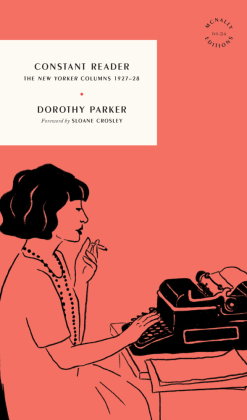
When, in 1927, Dorothy Parker became a book critic for the New Yorker, she was already a legendary wit, a much-quoted member of the Algonquin Round Table, and an arbiter of literary taste. In the year that she spent as a weekly reviewer, under the rubric "Constant Reader," she created what is still the most entertaining book column ever written. Parker's hot takes have lost none of their heat, whether she's taking aim at the evangelist Aimee Semple MacPherson ("She can go on like that for hours. Can, hell-does"), praising Hemingway's latest collection ("He discards detail with magnificent lavishness"), or dissenting from the Tao of Pooh ("And it is that word 'hummy,' my darlings, that marks the first place in The House at Pooh Corner at which Tonstant Weader Fwowed up").
Introduced with characteristic wit and sympathy by Sloane Crosley, Constant Reader gathers the complete weekly New Yorker reviews that Parker published from October 1927 through November 1928, with gimlet-eyed appreciations of the high and low, from Isadora Duncan to Al Smith, Charles Lindbergh to Little Orphan Annie, Mussolini to Emily Post