






Diese Website verwendet Cookies und ähnliche Technologien. Dabei handelt es sich um kleine Textdateien, die auf eurem Computer gespeichert und ausgelesen werden. Indem ihr auf "Alles akzeptieren" klickt, stimmt ihr der Verarbeitung von Daten, der Erstellung und Verarbeitung von individuellen Nutzungsprofilen über Websites und über Partner und Geräte hinweg sowie der Übermittlung eurer Daten an Drittanbieter zu, die eure Daten teilweise in Ländern außerhalb der Europäischen Union verarbeiten (GDPR Art. 49). Einzelheiten hierzu findet ihr in den Datenschutzhinweisen. Die Daten werden für Analysen und für eigene Zwecke Dritter verwendet. Weitere Informationen, auch über die Datenverarbeitung durch Drittanbieter und die Möglichkeit des Widerrufs, findet ihr in den Einstellungen und in unseren Datenschutzhinweisen. Hier könnt ihr mit den notwendigen Tools fortfahren.
- Verlag: Bloomsbury Trade
- Autor: Ömer Taspinar
- Artikel-Nr.: KNV97343471
- ISBN: 9780755655069
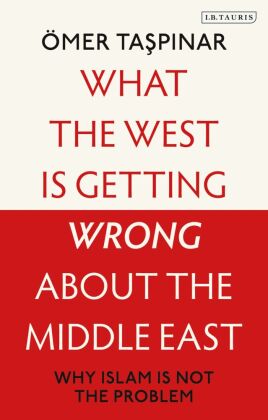
The West's actions in the Middle East are based on a fundamental misunderstanding: political Islam is repeatedly assumed to be the main cause of conflict and unrest in the region. The idea that we can decipher Jihadist radicalization or problems in the Middle East simply by reading the Qur'an has now become symptomatic of our age. This dangerous over-simplification and the West's obsession with Islam dominates media and policy analysis, ultimately skewing intervention and preventing long-term solutions and stability in the region.
Ömer Taspinar, who has 20 years' research and policymaking experience, explains here what is really going on in the Middle East. The book is based on three of the most pressing cases currently under the spotlight: the role of Erdogan and the unrest in Turkey; the sectarian clashes in Iraq, Syria, Yemen and Lebanon; and the existence of the so-called Islamic State. Islam is often seen as the root cause of the challenge associated with these cases. But by unpacking the real issues, such as entrenched authoritarianism, vast energy resources, excessive defense spending, and the youth bulge, the book demystifies what is happening and cites governance and nationalism as the main drivers of conflict. The book shows the importance of treating the causes - which are economic, social and institutional - rather than the symptom - the continued and growing success of Islamist parties and jihadist movements in assessing the Middle East. In revealing exactly how Islamism is activated and by analyzing the structural challenges of the region, this unique insider's account provides a map to understanding Middle Eastern wars and conflicts and the prospects for the future.