






Diese Website verwendet Cookies und ähnliche Technologien. Dabei handelt es sich um kleine Textdateien, die auf eurem Computer gespeichert und ausgelesen werden. Indem ihr auf "Alles akzeptieren" klickt, stimmt ihr der Verarbeitung von Daten, der Erstellung und Verarbeitung von individuellen Nutzungsprofilen über Websites und über Partner und Geräte hinweg sowie der Übermittlung eurer Daten an Drittanbieter zu, die eure Daten teilweise in Ländern außerhalb der Europäischen Union verarbeiten (GDPR Art. 49). Einzelheiten hierzu findet ihr in den Datenschutzhinweisen. Die Daten werden für Analysen und für eigene Zwecke Dritter verwendet. Weitere Informationen, auch über die Datenverarbeitung durch Drittanbieter und die Möglichkeit des Widerrufs, findet ihr in den Einstellungen und in unseren Datenschutzhinweisen. Hier könnt ihr mit den notwendigen Tools fortfahren.
- Verlag: Harvard Business Review Press
- Autor: Philipp Carlsson-Szlezak
- Artikel-Nr.: KNV97361547
- ISBN: 9781647825409
"a fresh, thorough and practicable book for anyone who wants to sharpen their macroeconomic judgment, structured in an easily accessible and insightful manner. It offers an invaluable framework to better understand growth, the financial sector and the key trends shaping the global economy." - Financial Times
An essential new guide to navigating macroeconomic risk.
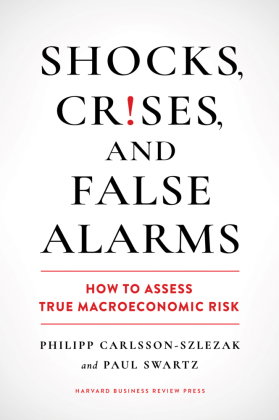
The shocks and crises of recent years-pandemic, recession, inflation, war-have forced executives and investors to recognize that the macroeconomy is now a risk to be actively managed. Yet unreliable forecasting, pervasive doomsaying, and whipsawing data severely hamper the task of decoding the landscape. Are disruptions transient and ephemeral-or permanent and structural? False alarms are costly traps, but so are true structural changes that go undetected.
How can leaders avoid these macro traps to make better tactical and strategic decisions?
In this perspective-shifting book, BCG Chief Economist Philipp Carlsson-Szlezak and Senior Economist Paul Swartz provide a fresh and accessible way to assess macroeconomic risk. Casting doubt on conventional model-based thinking, they demonstrate a more powerful approach to building sound macroeconomic judgment. Using incisive analysis built upon frameworks, historical context, and structural narratives-what they call "economic eclecticism"-the book empowers readers with the durable skills to assess continuously evolving risks in the real economy, the financial system, and the geopolitical arena.
Moreover, the authors' more nuanced approach reveals that the all-too-common narratives of economic collapse and decline are often false alarms themselves, while the fundamental strengths of our current "era of tightness" become visible.
With rational optimism rather than gloom, Shocks, Crises, and False Alarms speaks to the key financial and macroeconomic controversies that define our times-and provides a compass for navigating the global economy. Rather than relying on blinking dashboards or flashy headlines, leaders can and should judge macroeconomic risks for themselves.