






Diese Website verwendet Cookies und ähnliche Technologien. Dabei handelt es sich um kleine Textdateien, die auf eurem Computer gespeichert und ausgelesen werden. Indem ihr auf "Alles akzeptieren" klickt, stimmt ihr der Verarbeitung von Daten, der Erstellung und Verarbeitung von individuellen Nutzungsprofilen über Websites und über Partner und Geräte hinweg sowie der Übermittlung eurer Daten an Drittanbieter zu, die eure Daten teilweise in Ländern außerhalb der Europäischen Union verarbeiten (GDPR Art. 49). Einzelheiten hierzu findet ihr in den Datenschutzhinweisen. Die Daten werden für Analysen und für eigene Zwecke Dritter verwendet. Weitere Informationen, auch über die Datenverarbeitung durch Drittanbieter und die Möglichkeit des Widerrufs, findet ihr in den Einstellungen und in unseren Datenschutzhinweisen. Hier könnt ihr mit den notwendigen Tools fortfahren.
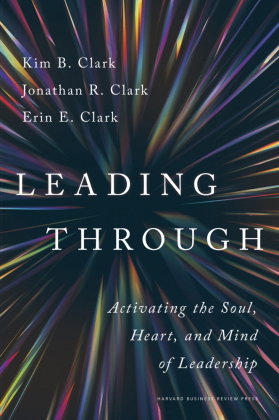
- Verlag: Harvard Business Review Press
- Autor: Kim B. Clark
- Artikel-Nr.: KNV97362652
- ISBN: 9781647827618
Generative AI and the remote-work revolution show us every day that we're in a new era. The rules and norms have changed-and so must leadership.
And yet, coercive bureaucracy, hierarchy, and control-old ways of thinking and working-are still with us, a deep-seated and powerful legacy. We are living through a profound transition from an old, industrial era to a new one that is digital, transparent, and complex.
In this important new book by former dean of Harvard Business School Kim Clark, written with his business school professor son, Jonathan, and management consultant daughter, Erin, the dynamic struggle between two competing paradigms of leadership is compellingly illustrated: an old paradigm that involves control and power over people versus a new one that enables and inspires power through people.
With rich examples and stories, the authors show how deeply ingrained the legacy model of leadership remains and how destructive it is, causing waste and loss of human potential, stifling innovation, and ultimately resulting in what the authors call "organizational darkness." They go on to articulate a new, positive model, one that consciously seeks to do good and to make things better; that cares for people, helping them to thrive; and that mobilizes people to solve tough problems. These three elements, they argue, are the soul, heart, and mind of leadership, and activating them requires careful attention to both the personal and the organizational dimensions of leadership.
The narrative is interwoven with probing analysis and reflection, and the authors speak clearly and frankly about the moral aspects and impact of leadership. They also provide a concrete frame and approach for scaling the new model and creating a vibrant leadership system.
Leading Through is a deep and essential account of the evolution of our leadership thinking and practice that is both timely and timeless.