






Diese Website verwendet Cookies und ähnliche Technologien. Dabei handelt es sich um kleine Textdateien, die auf eurem Computer gespeichert und ausgelesen werden. Indem ihr auf "Alles akzeptieren" klickt, stimmt ihr der Verarbeitung von Daten, der Erstellung und Verarbeitung von individuellen Nutzungsprofilen über Websites und über Partner und Geräte hinweg sowie der Übermittlung eurer Daten an Drittanbieter zu, die eure Daten teilweise in Ländern außerhalb der Europäischen Union verarbeiten (GDPR Art. 49). Einzelheiten hierzu findet ihr in den Datenschutzhinweisen. Die Daten werden für Analysen und für eigene Zwecke Dritter verwendet. Weitere Informationen, auch über die Datenverarbeitung durch Drittanbieter und die Möglichkeit des Widerrufs, findet ihr in den Einstellungen und in unseren Datenschutzhinweisen. Hier könnt ihr mit den notwendigen Tools fortfahren.
- Verlag: Springer, Berlin
- Autor: Catherine Prentice
- Artikel-Nr.: KNV97440897
- ISBN: 9789819918676
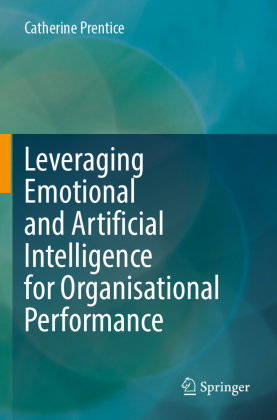
This book is structured as follows. Chapters 2 and 3 demystify emotional and artificial intelligence, from different perspectives, including conceptualisations, the history and evolution of the concepts, how they function and where they can apply to. These discussions help readers understand what exactly these two intelligences are. Chapters 4 and 5 analyse how emotional intelligence is related to employees and customers, respectively, with a focus on service organisations. Chapters 6-8 are dedicated to anatomising AI and how it is operationalised as a service to influence employees and customers. Specifically, viewing AI as a service, Chapter 6 examines the impact of AI service quality and how it is related to employee service quality. Chapter 7 analyses the influence of AI service quality on customers. Based on the discussion in Chapters 6 and 7, Chapter 8 is extended to develop a scale to measure such AI service, named AI service quality.
The last three chapters of this book integrate EI and AI to analyse their respective impacts on employees and customers. Chapter 9 proposes EI as a moderator of AI, whereas Chapter 10 proposes AI as a moderator of EI. Chapter 11 employs service profit chain to integrate EI and AI in the chain relationship to understand their effects on both employees and customers. This chapter broadly covers the service industry with a focus on tourism and hospitality sector. The discussion on the impact of EI and AI is complemented with empirical studies conducted in tourism or hospitality context to address their effects in these sectors.