






Diese Website verwendet Cookies und ähnliche Technologien. Dabei handelt es sich um kleine Textdateien, die auf eurem Computer gespeichert und ausgelesen werden. Indem ihr auf "Alles akzeptieren" klickt, stimmt ihr der Verarbeitung von Daten, der Erstellung und Verarbeitung von individuellen Nutzungsprofilen über Websites und über Partner und Geräte hinweg sowie der Übermittlung eurer Daten an Drittanbieter zu, die eure Daten teilweise in Ländern außerhalb der Europäischen Union verarbeiten (GDPR Art. 49). Einzelheiten hierzu findet ihr in den Datenschutzhinweisen. Die Daten werden für Analysen und für eigene Zwecke Dritter verwendet. Weitere Informationen, auch über die Datenverarbeitung durch Drittanbieter und die Möglichkeit des Widerrufs, findet ihr in den Einstellungen und in unseren Datenschutzhinweisen. Hier könnt ihr mit den notwendigen Tools fortfahren.
- Verlag: Springer, Berlin
- Autor: CICC Global Institute CICC Research
- Artikel-Nr.: KNV97461827
- ISBN: 9789819744671
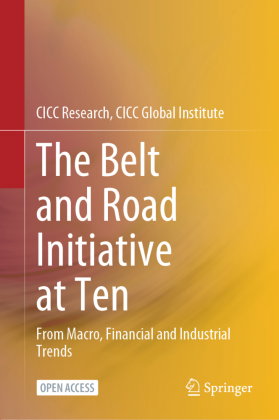
This open access book analyzes the achievements and challenges of the Belt and Road Initiative (BRI) from the macro and industrial, real and financial, domestic and international perspectives, and explores the opportunities for future development and related public policy issues. It is a new research achievement of CICC Research and CICC Global Institute on major issues in China's new development stage.
The year 2023 marks the tenth anniversary of the Belt and Road Initiative (BRI). Over the past decade, BRI has established more than 3,000 cooperation projects, galvanized nearly 1 trillion U.S. dollars of investment, created more than 420,000 jobs, and lifted nearly 40 million people out of poverty. BRI has made remarkable achievements in promoting connectivity and cooperative development between China and participating countries, and has been welcomed by the international community both as a public good and a cooperation platform.
Compared with ten years ago, the global environment has undergone profound changes. COVID-19 epidemic has brought great impacts to the world, and the post-epidemic economic recovery is uneven, with some long-term scarring effects still emerging. New changes and constraints, such as geopolitical events, industry chain adjustment, and green transition, have also exerted far-reaching influences on the economic fundamentals and global governance. Under the new situation, international cooperation mechanisms, including BRI, are facing new problems and challenges, which need to be explored and solved in practice.
This book is both academically rigorous and readable, and provides valuable references for public policy departments, enterprises, and financial institutions who seek to better understand the macro, financial and industrial trends of BRI.