






Diese Website verwendet Cookies und ähnliche Technologien. Dabei handelt es sich um kleine Textdateien, die auf eurem Computer gespeichert und ausgelesen werden. Indem ihr auf "Alles akzeptieren" klickt, stimmt ihr der Verarbeitung von Daten, der Erstellung und Verarbeitung von individuellen Nutzungsprofilen über Websites und über Partner und Geräte hinweg sowie der Übermittlung eurer Daten an Drittanbieter zu, die eure Daten teilweise in Ländern außerhalb der Europäischen Union verarbeiten (GDPR Art. 49). Einzelheiten hierzu findet ihr in den Datenschutzhinweisen. Die Daten werden für Analysen und für eigene Zwecke Dritter verwendet. Weitere Informationen, auch über die Datenverarbeitung durch Drittanbieter und die Möglichkeit des Widerrufs, findet ihr in den Einstellungen und in unseren Datenschutzhinweisen. Hier könnt ihr mit den notwendigen Tools fortfahren.
- Verlag: Springer, Berlin
- Autor: Oskar Mulej
- Artikel-Nr.: KNV97461711
- ISBN: 9783031644788
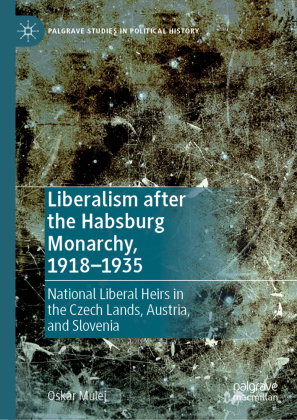
This book explores what it meant to be 'liberal ' in interwar Czech, Austrian, and Slovenian politics. Up until 1918, these countries shared the common political framework of Cisleithania (the Austrian part of the Habsburg Monarchy). Within this framework was the predominantly pejorative function of the label 'liberal,' and as a result after 1918, no major political party employed it to describe its own political orientation. Despite making considerable efforts to dissociate themselves from liberalism, many parties continued to be referred to as 'liberal ' by the contemporary public. This association with liberalism, the book argues, was primarily due to the parties' historical background rather than any ideological commitment to liberalism, and for that reason, the author refers to them as 'national liberal heirs.' Examining the (dis)continuities of liberal party traditions, the book presents three representative cases of national liberal heirs: the Czechoslovak National Democracy; the Greater German People's Party; and the Slovenian sections of the Yugoslav Democratic Party, the Independent Democratic Party, and the Yugoslav National Party. Forming a distinctive part of early twentieth-century party landscapes in Central Europe, the national liberal heirs had inherited organisational structures, parts of electorate, as well as rootedness in specific cultural and social milieus from their liberal predecessors. Following the political trajectories of the national liberal heirs, the author seeks to answer in which spheres, in which manners, and to what extent liberalism survived or even continued to develop in the interwar Czech lands, Austria, and Slovenia.