






Diese Website verwendet Cookies und ähnliche Technologien. Dabei handelt es sich um kleine Textdateien, die auf eurem Computer gespeichert und ausgelesen werden. Indem ihr auf "Alles akzeptieren" klickt, stimmt ihr der Verarbeitung von Daten, der Erstellung und Verarbeitung von individuellen Nutzungsprofilen über Websites und über Partner und Geräte hinweg sowie der Übermittlung eurer Daten an Drittanbieter zu, die eure Daten teilweise in Ländern außerhalb der Europäischen Union verarbeiten (GDPR Art. 49). Einzelheiten hierzu findet ihr in den Datenschutzhinweisen. Die Daten werden für Analysen und für eigene Zwecke Dritter verwendet. Weitere Informationen, auch über die Datenverarbeitung durch Drittanbieter und die Möglichkeit des Widerrufs, findet ihr in den Einstellungen und in unseren Datenschutzhinweisen. Hier könnt ihr mit den notwendigen Tools fortfahren.
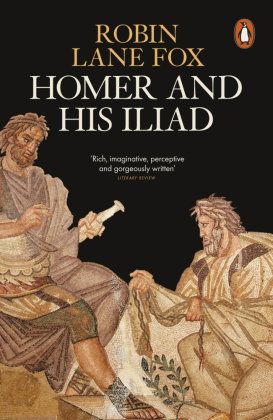
- Verlag: Penguin Books UK
- Autor: Robin Lane Fox
- Artikel-Nr.: KNV97237643
- ISBN: 9780141997797
A thrilling study of the greatest of all epic poems, by one of the world's leading classicists
Homer's Iliad is the famous epic poem set among the tales of Troy. Its subject is the anger of the hero Achilles and its dreadful consequences for the warring Greeks and Trojans. It was composed more than 2,600 years ago, but still transfixes us with its tale of loss and battle, love and revenge, guided throughout by the active presence of the gods. Its beauty and profound bleakness are intensely moving but great questions remain: where, how and when it was composed and why it has such enduring power?
In this compelling book Robin Lane Fox addresses these questions, drawing on a life-long love and engagement with the poem. He argues for a place, a date and a method for its composition, giving us a sense of alternative approaches and grounding his own in discoveries about long heroic poems composed elsewhere in the world, and the ever-growing evidence of archaeology.
Unlike other books on the Iliad, this one combines the detailed expertise of a historian with the sensitivity of a teacher of it as poetry. Lane Fox goes on to consider hallmarks of the poem, its values, implicit and explicit, its characters, its women, its gods and even its horses. He argues repeatedly for its beautiful observation and addresses its parallel use of what is, to us, the natural world. Thousands of readers turn to the Iliad every year. In this superbly written and conceived tribute, Lane Fox expresses and amplifies what old and new readers can find in it. It is pervaded, he argues, by a poignant hardness which is not just a poetic trick. It is a deeply held view of the world.