






Diese Website verwendet Cookies und ähnliche Technologien. Dabei handelt es sich um kleine Textdateien, die auf eurem Computer gespeichert und ausgelesen werden. Indem ihr auf "Alles akzeptieren" klickt, stimmt ihr der Verarbeitung von Daten, der Erstellung und Verarbeitung von individuellen Nutzungsprofilen über Websites und über Partner und Geräte hinweg sowie der Übermittlung eurer Daten an Drittanbieter zu, die eure Daten teilweise in Ländern außerhalb der Europäischen Union verarbeiten (GDPR Art. 49). Einzelheiten hierzu findet ihr in den Datenschutzhinweisen. Die Daten werden für Analysen und für eigene Zwecke Dritter verwendet. Weitere Informationen, auch über die Datenverarbeitung durch Drittanbieter und die Möglichkeit des Widerrufs, findet ihr in den Einstellungen und in unseren Datenschutzhinweisen. Hier könnt ihr mit den notwendigen Tools fortfahren.
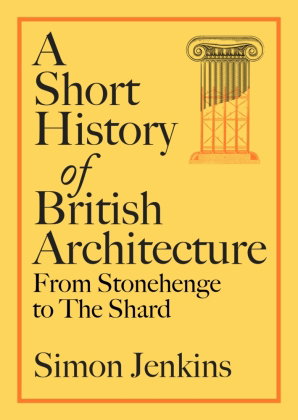
- Verlag: Penguin Books UK
- Autor: Simon Jenkins
- Artikel-Nr.: KNV97237850
- ISBN: 9780241674956
'Provocative, elegant, intriguing - Jenkins is a bold, imaginative writer, brilliant at challenging old assumptions and encouraging you to look at British architecture in a new light' Rory Stewart
'Clear and admirably concise...a brilliant, blistering polemic against the architectural depredations of the past century' The Times
The architecture of Britain is an art gallery all around us. From our streets to squares, through our cities, suburbs and villages, we are surrounded by magnificent buildings of eclectic styles. A Short History of British Architecture is the gripping and untold story of why Britain looks the way it does, from prehistoric Stonehenge to the lofty towers of today.
Bestselling historian Simon Jenkins traces the relentless battles over the European traditions of classicism and gothic. He guides us from the gothic cathedrals of Lincoln, Ely and Wells to the 'prodigy' houses of the Tudor renaissance, and visits the great estates of Georgian London, the docks of Liverpool, the mills of Yorkshire and the chapels of south Wales.
The arrival of modernism in the twentieth century politicised public taste, upheaved communities and sought to reconstruct entire cities. It produced Coventry Cathedral and Lloyd's of London, but also the brutalist monoliths of Sheffield's Park Hill, Glasgow's Cumbernauld and London's South Bank. Only in the 1970s did the public at last give voice to what became the conservation revolution - a movement in which Jenkins played a leading role, both as deputy chairman of English Heritage and chairman of the National Trust, and in the saving of iconic buildings such as St Pancras International and Covent Garden.
Jenkins shows that everyone is a consumer of architecture and makes the case for the importance of everyone learning to speak its language. A Short History of British Architecture is a celebration of our national treasures, a lament of our failures - and a call to arms.