






Diese Website verwendet Cookies und ähnliche Technologien. Dabei handelt es sich um kleine Textdateien, die auf eurem Computer gespeichert und ausgelesen werden. Indem ihr auf "Alles akzeptieren" klickt, stimmt ihr der Verarbeitung von Daten, der Erstellung und Verarbeitung von individuellen Nutzungsprofilen über Websites und über Partner und Geräte hinweg sowie der Übermittlung eurer Daten an Drittanbieter zu, die eure Daten teilweise in Ländern außerhalb der Europäischen Union verarbeiten (GDPR Art. 49). Einzelheiten hierzu findet ihr in den Datenschutzhinweisen. Die Daten werden für Analysen und für eigene Zwecke Dritter verwendet. Weitere Informationen, auch über die Datenverarbeitung durch Drittanbieter und die Möglichkeit des Widerrufs, findet ihr in den Einstellungen und in unseren Datenschutzhinweisen. Hier könnt ihr mit den notwendigen Tools fortfahren.
- Verlag: Springer, Berlin
- Autor: Uoldelul Chelati Dirar
- Artikel-Nr.: KNV97506246
- ISBN: 9789819757664
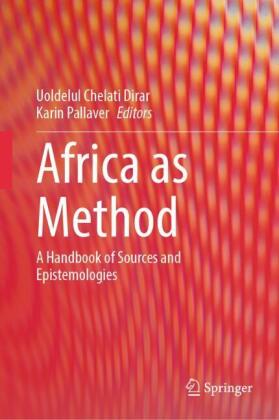
This methods handbook investigates the multiple sources and interdisciplinary methodologies employed by scholars working on Africa. It illuminates how scholars of Africa locate, select, interpret, and combine sources to reconstruct Africa's past. Each contributor presents a specific typology of source or body of sources. Focusing on specific case studies, the chapters offer a broad overview of the methods and sources employed by historians, anthropologists, linguists, and related disciplines in the humanities and social sciences, working on Africa. The topics covered are diverse and include the significance of oral sources and how they relate to written sources; the perspectives provided by female writings on and from Africa; the relevance of Islamic court records for the study of Africa; the use of songs and poetry for the understanding of contemporary political protests; the employment of photographs and other visual sources for the study of the African past; how new sources or new interpretations of existing ones can provide different historical periodization; and finally, how biographies and autobiographies, including personal experiences with fieldwork in Africa, can contribute to shed light on Africa's past. The book is a valuable resource for graduate students and academics interested in doing research on Africa. It provides a sweeping but rich understanding of the methodologies in the field of African studies, and for historians in general. Ultimately, this book contends that the specific methodologies developed for the study of Africa are relevant not only for the understanding of the continent itself, but can also contribute significantly to the historical method more widely.