






Diese Website verwendet Cookies und ähnliche Technologien. Dabei handelt es sich um kleine Textdateien, die auf eurem Computer gespeichert und ausgelesen werden. Indem ihr auf "Alles akzeptieren" klickt, stimmt ihr der Verarbeitung von Daten, der Erstellung und Verarbeitung von individuellen Nutzungsprofilen über Websites und über Partner und Geräte hinweg sowie der Übermittlung eurer Daten an Drittanbieter zu, die eure Daten teilweise in Ländern außerhalb der Europäischen Union verarbeiten (GDPR Art. 49). Einzelheiten hierzu findet ihr in den Datenschutzhinweisen. Die Daten werden für Analysen und für eigene Zwecke Dritter verwendet. Weitere Informationen, auch über die Datenverarbeitung durch Drittanbieter und die Möglichkeit des Widerrufs, findet ihr in den Einstellungen und in unseren Datenschutzhinweisen. Hier könnt ihr mit den notwendigen Tools fortfahren.
- Verlag: De Gruyter
- Autor: Jean-Pierre Fortin
- Artikel-Nr.: KNV97643602
- ISBN: 9783111450346
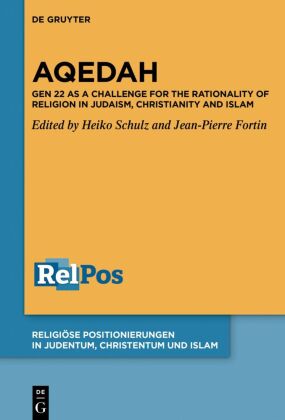
The Aqedah, i.e., the story of the 'binding' of Isaac by Abraham, is a core text in all three Abrahamic religions and has been widely discussed in Judaism, Christianity and Islam for centuries. It still represents an intellectual, moral, and spiritual challenge for anyone who claims to be able to link morality and faith in God in a reasonably comprehensible way. The contributions in this anthology address this challenge from philosophical, theological and literary perspectives, by considering exemplary problems, epochs and authors pertaining to all three Abrahamic religions. The first part contains seven contributions exploring the epistemic and/or philosophical dimensions of the Aqedah. The second part contains nine essays on the (history of the) interpretation of the Aqedah from Israelite/Jewish, Christian and Islamic perspectives. The three texts in the third and final part discuss narratological issues and reflections of the problem within modern Hebrew literature. The volume complements and expands the existing scholarship on the subject, above all through its consistently interreligious approach and the inclusion of current philosophical and literary sources and debates.