






Diese Website verwendet Cookies und ähnliche Technologien. Dabei handelt es sich um kleine Textdateien, die auf eurem Computer gespeichert und ausgelesen werden. Indem ihr auf "Alles akzeptieren" klickt, stimmt ihr der Verarbeitung von Daten, der Erstellung und Verarbeitung von individuellen Nutzungsprofilen über Websites und über Partner und Geräte hinweg sowie der Übermittlung eurer Daten an Drittanbieter zu, die eure Daten teilweise in Ländern außerhalb der Europäischen Union verarbeiten (GDPR Art. 49). Einzelheiten hierzu findet ihr in den Datenschutzhinweisen. Die Daten werden für Analysen und für eigene Zwecke Dritter verwendet. Weitere Informationen, auch über die Datenverarbeitung durch Drittanbieter und die Möglichkeit des Widerrufs, findet ihr in den Einstellungen und in unseren Datenschutzhinweisen. Hier könnt ihr mit den notwendigen Tools fortfahren.
- Verlag: Simon & Schuster UK
- Autor: Raj M. Shah
- Artikel-Nr.: KNV97593629
- ISBN: 9781668031384
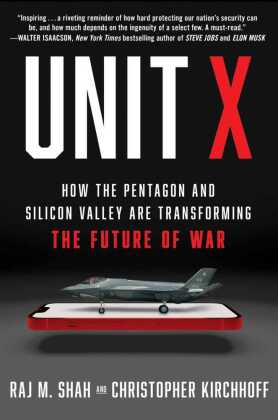
A riveting inside look at an elite unit within the Pentagon-the Defense Innovation Unit, also known as Unit X-whose mission is to bring Silicon Valley's cutting-edge technology to America's military: from the two men who launched the unit.
A vast and largely unseen transformation of how war is fought as profound as the invention of gunpowder or advent of the nuclear age is occurring. Flying cars that can land like helicopters, artificial intelligence-powered drones that can fly into buildings and map their interiors, microsatellites that can see through clouds and monitor rogue missile sites-all these and more are becoming part of America's DIU-fast-tracked arsenal.
Until recently, the Pentagon was known for its uncomfortable relationship with Silicon Valley and for slow-moving processes that acted as a brake on innovation. Unit X was specifically designed as a bridge to Valley technologists that would accelerate bringing state of the art software and hardware to the battle space. Given authority to cut through red tape and function almost as a venture capital firm, Shah, Kirchhoff, and others in the Unit who came after were tasked particularly with meeting immediate military needs with technology from Valley startups rather than from so-called "primes"-behemoth companies like Lockheed, Raytheon, and Boeing.
Taking us inside AI labs, drone workshops, and battle command centers-and, also, overseas to Ukraine's frontlines-Shah and Kirchhoff paint a fascinating picture of what it takes to stay dominant in a fast-changing and often precarious geopolitical landscape.
In an era when America's chief rival, China, has ordered that all commercial firms within its borders make their research and technology available for military exploitation, strengthening the relationship between Washington and Silicon Valley was always advisable. Today, it is an urgent necessity.