


Diese Website verwendet Cookies und ähnliche Technologien. Dabei handelt es sich um kleine Textdateien, die auf eurem Computer gespeichert und ausgelesen werden. Indem ihr auf "Alles akzeptieren" klickt, stimmt ihr der Verarbeitung von Daten, der Erstellung und Verarbeitung von individuellen Nutzungsprofilen über Websites und über Partner und Geräte hinweg sowie der Übermittlung eurer Daten an Drittanbieter zu, die eure Daten teilweise in Ländern außerhalb der Europäischen Union verarbeiten (GDPR Art. 49). Einzelheiten hierzu findet ihr in den Datenschutzhinweisen. Die Daten werden für Analysen und für eigene Zwecke Dritter verwendet. Weitere Informationen, auch über die Datenverarbeitung durch Drittanbieter und die Möglichkeit des Widerrufs, findet ihr in den Einstellungen und in unseren Datenschutzhinweisen. Hier könnt ihr mit den notwendigen Tools fortfahren.
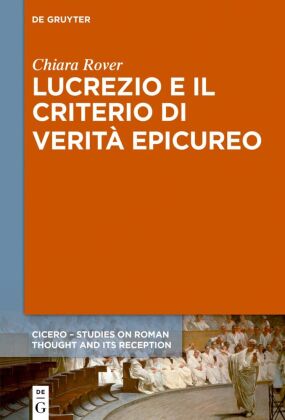
- Verlag: De Gruyter
- Autor: Chiara Rover
- Artikel-Nr.: KNV97593505
- ISBN: 9783111594118
Was Lucretius a "fundamentalist" Epicurean and a mere repeater of his Master's words, or did he emerge as an innovative philosopher in his own right? The relationship between Lucretius and Epicurus remains a complex and unresolved issue in Epicurean scholarship. To what extent was Lucretius aware of intellectual debates following Epicurus, and how did he contribute to them?
The volume examines these questions through an epistemological lens, focusing on the Canonic, the science of the criterion. Epicurus, who died around 271/270 BC, did not fully witness firsthand the impact of his doctrines on Hellenistic epistemology, nor could he defend them against subsequent criticisms, tasks left to his successors. By systematically examining the doctrine of the criterion of truth in De rerum natura, this study shows how Lucretius actively engaged in the defence and evolution of early Epicureanism. Despite his fidelity to Epicurus, the Poet displayed a remarkable philosophical ability to independently rethink and rework materials from both within the Epicurean tradition and beyond, thereby reiterating, on a broader scale, the non-monolithic nature of the Kepos. It appeals to scholars interested in Hellenistic and Roman philosophy alike.