






Diese Website verwendet Cookies und ähnliche Technologien. Dabei handelt es sich um kleine Textdateien, die auf eurem Computer gespeichert und ausgelesen werden. Indem ihr auf "Alles akzeptieren" klickt, stimmt ihr der Verarbeitung von Daten, der Erstellung und Verarbeitung von individuellen Nutzungsprofilen über Websites und über Partner und Geräte hinweg sowie der Übermittlung eurer Daten an Drittanbieter zu, die eure Daten teilweise in Ländern außerhalb der Europäischen Union verarbeiten (GDPR Art. 49). Einzelheiten hierzu findet ihr in den Datenschutzhinweisen. Die Daten werden für Analysen und für eigene Zwecke Dritter verwendet. Weitere Informationen, auch über die Datenverarbeitung durch Drittanbieter und die Möglichkeit des Widerrufs, findet ihr in den Einstellungen und in unseren Datenschutzhinweisen. Hier könnt ihr mit den notwendigen Tools fortfahren.
- Verlag: Taylor & Francis
- Autor: Scott Pribble
- Artikel-Nr.: KNV97617218
- ISBN: 9781032387024
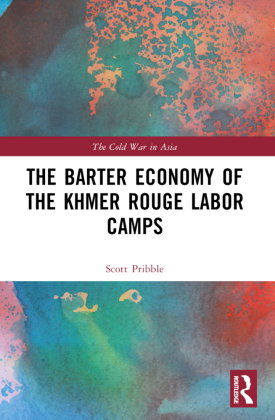
Pribble investigates the barter economies that developed in many of the labor camps established under the Khmer Rouge in Cambodia.
When the Khmer Rouge abolished currency and markets in 1975, starving Cambodians created underground exchanges in labor camps throughout the country, bartering luxury items for food and other necessities, while simultaneously undermining the regime's ideological goals of eliminating any traces of capitalism in Democratic Kampuchea. Pribble asserts three key points about the barter economy in the Khmer Rouge labor camps. First, the underground exchanges in Democratic Kampuchea provided food and medicine for desperate people subsisting under a totalitarian regime, saving the lives of countless Cambodians. Second, bartering was the riskiest way to obtain food because it was dependent upon the discretion of two or more individuals from different social classes under the threat of violent punishment, thereby altering the social dynamics of the camps. Finally, despite the regime's extreme efforts to eliminate foreign influence from the country and impose communist ideology on millions of citizens, basic forms of market capitalism and a demand for superfluous luxury goods persisted in labor camps throughout the country.
A fascinating study of the human consequences of imposing rigid ideology, that will be of particular interest to scholars and students of political history and Southeast Asian history.
The Open Access version of this book, available at www.taylorfrancis.com, has been made available under a Creative Commons Attribution-Non Commercial-No Derivatives 4.0 license.