






Diese Website verwendet Cookies und ähnliche Technologien. Dabei handelt es sich um kleine Textdateien, die auf eurem Computer gespeichert und ausgelesen werden. Indem ihr auf "Alles akzeptieren" klickt, stimmt ihr der Verarbeitung von Daten, der Erstellung und Verarbeitung von individuellen Nutzungsprofilen über Websites und über Partner und Geräte hinweg sowie der Übermittlung eurer Daten an Drittanbieter zu, die eure Daten teilweise in Ländern außerhalb der Europäischen Union verarbeiten (GDPR Art. 49). Einzelheiten hierzu findet ihr in den Datenschutzhinweisen. Die Daten werden für Analysen und für eigene Zwecke Dritter verwendet. Weitere Informationen, auch über die Datenverarbeitung durch Drittanbieter und die Möglichkeit des Widerrufs, findet ihr in den Einstellungen und in unseren Datenschutzhinweisen. Hier könnt ihr mit den notwendigen Tools fortfahren.
- Verlag: Taylor & Francis
- Autor: Michael A. Burayidi
- Artikel-Nr.: KNV97618758
- ISBN: 9781032570211
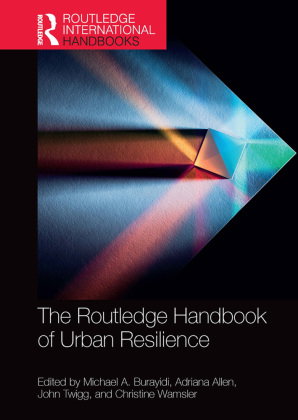
This volume provides a comprehensive discussion and overview of urban resilience, including socio-ecological and economic hazard and disaster resilience. It provides a summary of state of the art thinking on resilience, the different approaches, tools and methodologies for understanding the subject in urban contexts, and brings together related reflections and initiatives.
Throughout the different chapters, the handbook critically examines and reviews the resilience concept from various disciplinary and professional perspectives. It also discusses major urban crises, past and recent, and the generic lessons they provide for resilience. In this context, the authors provide case studies from different places and times, including historical material and contemporary examples, and studies that offer concrete guidance on how to approach urban resilience. Other chapters focus on how current understanding of urban systems - such as shrinking cities, green infrastructure, disaster volunteerism, and urban energy systems - are affecting the capacity of urban citizens, settlements and nation-states to respond to different forms and levels of stressors and shocks. The handbook concludes with a synthesis of the state of the art knowledge on resilience and points the way forward in refining the conceptualization and application of urban resilience.
The book is intended for scholars and graduate students in urban studies, environmental and sustainability studies, geography, planning, architecture, urban design, political science and sociology, for whom it will provide an invaluable and up-to-date guide to current approaches across these disciplines that converge in the study of urban resilience. The book also provides important direction to practitioners and civic leaders who are engaged in supporting cities and regions to position themselves for resilience in the face of climate change, unpredictable socioenvironmental shocks and incremental risk accumulation.