






Diese Website verwendet Cookies und ähnliche Technologien. Dabei handelt es sich um kleine Textdateien, die auf eurem Computer gespeichert und ausgelesen werden. Indem ihr auf "Alles akzeptieren" klickt, stimmt ihr der Verarbeitung von Daten, der Erstellung und Verarbeitung von individuellen Nutzungsprofilen über Websites und über Partner und Geräte hinweg sowie der Übermittlung eurer Daten an Drittanbieter zu, die eure Daten teilweise in Ländern außerhalb der Europäischen Union verarbeiten (GDPR Art. 49). Einzelheiten hierzu findet ihr in den Datenschutzhinweisen. Die Daten werden für Analysen und für eigene Zwecke Dritter verwendet. Weitere Informationen, auch über die Datenverarbeitung durch Drittanbieter und die Möglichkeit des Widerrufs, findet ihr in den Einstellungen und in unseren Datenschutzhinweisen. Hier könnt ihr mit den notwendigen Tools fortfahren.
- Verlag: Taylor & Francis
- Autor: Michael D. Kirchhoff
- Artikel-Nr.: KNV97620589
- ISBN: 9781032570198
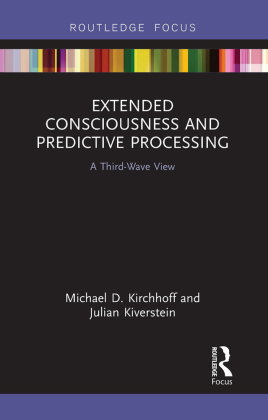
In this jointly authored book, Kirchhoff and Kiverstein defend the controversial thesis that phenomenal consciousness is realised by more than just the brain. They argue that the mechanisms and processes that realise phenomenal consciousness can at times extend across brain, body, and the social, material, and cultural world. Kirchhoff and Kiverstein offer a state-of-the-art tour of current arguments for and against extended consciousness. They aim to persuade you that it is possible to develop and defend the thesis of extended consciousness through the increasingly influential predictive processing theory developed in cognitive neuroscience. They show how predictive processing can be given a new reading as part of a third-wave account of the extended mind.
The third-wave claims that the boundaries of mind are not fixed and stable but fragile and hard-won, and always open to negotiation. It calls into question any separation of the biological from the social and cultural when thinking about the boundaries of the mind. Kirchhoff and Kiverstein show how this account of the mind finds support in predictive processing, leading them to a view of phenomenal consciousness as partially realised by patterns of cultural practice.