






Diese Website verwendet Cookies und ähnliche Technologien. Dabei handelt es sich um kleine Textdateien, die auf eurem Computer gespeichert und ausgelesen werden. Indem ihr auf "Alles akzeptieren" klickt, stimmt ihr der Verarbeitung von Daten, der Erstellung und Verarbeitung von individuellen Nutzungsprofilen über Websites und über Partner und Geräte hinweg sowie der Übermittlung eurer Daten an Drittanbieter zu, die eure Daten teilweise in Ländern außerhalb der Europäischen Union verarbeiten (GDPR Art. 49). Einzelheiten hierzu findet ihr in den Datenschutzhinweisen. Die Daten werden für Analysen und für eigene Zwecke Dritter verwendet. Weitere Informationen, auch über die Datenverarbeitung durch Drittanbieter und die Möglichkeit des Widerrufs, findet ihr in den Einstellungen und in unseren Datenschutzhinweisen. Hier könnt ihr mit den notwendigen Tools fortfahren.
- Verlag: Taylor & Francis
- Autor: Maximilian Jungmann
- Artikel-Nr.: KNV97606363
- ISBN: 9780367703141
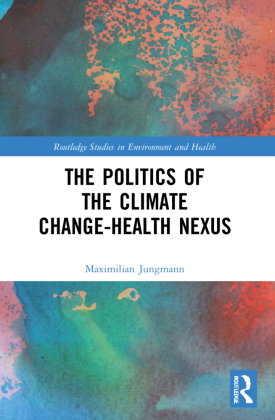
This book compares how governments in 192 countries perceive climate change related health risks and which measures they undertake to protect their populations.
Building on case studies from the United Kingdom, Ireland, South Korea, Japan and Sri Lanka, The Politics of the Climate Change-Health Nexus demonstrates the strong influence of epistemic communities and international organisations on decision making in the field of climate change and health. Jungmann shows that due to the complexity and uncertainty of climate change related health risks, governments depend on the expertise of universities, think tanks, international organisations and researchers within the public sector to understand, strategize and implement effective health adaptation measures. Due to their general openness towards new ideas and academic freedom, the book shows that more democratic states tend to demonstrate a higher recognition of the need to protect their populations. However, the level of success largely depends on the strength of their epistemic communities and the involvement of international organisations.
This volume will be of great interest to students and scholars of climate change and public health. It will also be a valuable resource for policymakers from around the world to learn from best practices and thus improve the health adaptation work in their own countries.