






Diese Website verwendet Cookies und ähnliche Technologien. Dabei handelt es sich um kleine Textdateien, die auf eurem Computer gespeichert und ausgelesen werden. Indem ihr auf "Alles akzeptieren" klickt, stimmt ihr der Verarbeitung von Daten, der Erstellung und Verarbeitung von individuellen Nutzungsprofilen über Websites und über Partner und Geräte hinweg sowie der Übermittlung eurer Daten an Drittanbieter zu, die eure Daten teilweise in Ländern außerhalb der Europäischen Union verarbeiten (GDPR Art. 49). Einzelheiten hierzu findet ihr in den Datenschutzhinweisen. Die Daten werden für Analysen und für eigene Zwecke Dritter verwendet. Weitere Informationen, auch über die Datenverarbeitung durch Drittanbieter und die Möglichkeit des Widerrufs, findet ihr in den Einstellungen und in unseren Datenschutzhinweisen. Hier könnt ihr mit den notwendigen Tools fortfahren.
- Verlag: Penguin Random House
- Autor: Elaine Hsieh Chou
- Artikel-Nr.: KNV97588399
- ISBN: 9780593298374
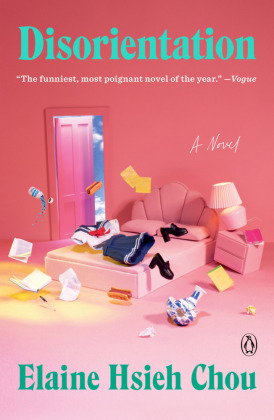
A Taiwanese American woman s coming-of-consciousness ignites eye-opening revelations and chaos on a college campus in this outrageously hilarious and startlingly tender debut novel.
Twenty-nine-year-old PhD student Ingrid Yang is desperate to finish her dissertation on the late canonical poet Xiao-Wen Chou and never read about Chinese-y things again. But after years of grueling research, all she has to show for her efforts are a junk food addiction and stomach pain. When she accidentally stumbles upon a curious note in the Chou archives one afternoon, it looks like her ticket out of academic hell.
But Ingrid s in much deeper than she thinks. Her clumsy exploits to unravel the note s message lead to an explosive discovery, upending her entire life and the lives of those around her. What follows is a roller coaster of mishaps and misadventures, from book burnings and OTC drug hallucinations, to hot-button protests and Yellow Peril 2.0 propaganda. As the events Ingrid instigated keep spiraling, she ll have to confront her sticky relationship to white men and white institutions and, most of all, herself.
A blistering send-up of privilege and power, and a profound reckoning of individual complicity and unspoken rage, in Disorientation Elaine Hsieh Chou asks who gets to tell our stories and how the story changes when we finally tell it ourselves.