






Diese Website verwendet Cookies und ähnliche Technologien. Dabei handelt es sich um kleine Textdateien, die auf eurem Computer gespeichert und ausgelesen werden. Indem ihr auf "Alles akzeptieren" klickt, stimmt ihr der Verarbeitung von Daten, der Erstellung und Verarbeitung von individuellen Nutzungsprofilen über Websites und über Partner und Geräte hinweg sowie der Übermittlung eurer Daten an Drittanbieter zu, die eure Daten teilweise in Ländern außerhalb der Europäischen Union verarbeiten (GDPR Art. 49). Einzelheiten hierzu findet ihr in den Datenschutzhinweisen. Die Daten werden für Analysen und für eigene Zwecke Dritter verwendet. Weitere Informationen, auch über die Datenverarbeitung durch Drittanbieter und die Möglichkeit des Widerrufs, findet ihr in den Einstellungen und in unseren Datenschutzhinweisen. Hier könnt ihr mit den notwendigen Tools fortfahren.
- Verlag: Hurst
- Autor: Luka Ivan Jukic
- Artikel-Nr.: KNV97733697
- ISBN: 9781911723981
Selected by The Times as 'Best History Book of the Year'
An absorbing journey through a region caught between history, geography and ideology.
What is 'Central Europe'? Where do its borders lie? Does it even exist? Attempts to define it usually yield more questions than answers. But perhaps the wrong questions are being asked.
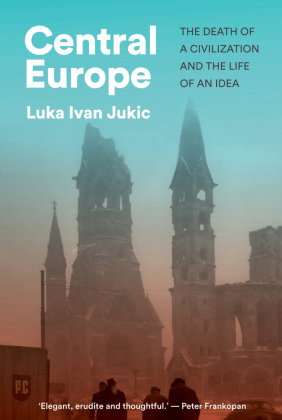
Luka Ivan Jukic disentangles the enigma of Central Europe through its birth, death and rebirth. Today, Poland, Croatia and even Ukraine proudly align themselves with it, and so with Western civilization. But the term originally described an unrecognisably different world--one formed in the eighteenth century by the unique inheritance of the Habsburg dynasty across Germany and a sprawling Danubian realm; by the rise of standard High German; and by its intermediate position between an 'advanced West' and 'backwards East'.
Two devastating world wars shattered this extraordinary civilization, reducing it to a Cold War frontier. Its unexpected reincarnation in the 1980s, as an ideological antidote to the Soviet East, spawned myths and polemics, but little clarity. Yet 'Central Europe' seems to feature in every contemporary crisis, from Russian aggression to European disunity. Why is it still such a powerful political idea?
- A history of an undefined and enigmatic region
- Questions whether 'Central Europe' can continue to be applied to a region that has seen such change since the term came into use
- Asks why this region has experienced so much conflict and crisis