






Diese Website verwendet Cookies und ähnliche Technologien. Dabei handelt es sich um kleine Textdateien, die auf eurem Computer gespeichert und ausgelesen werden. Indem ihr auf "Alles akzeptieren" klickt, stimmt ihr der Verarbeitung von Daten, der Erstellung und Verarbeitung von individuellen Nutzungsprofilen über Websites und über Partner und Geräte hinweg sowie der Übermittlung eurer Daten an Drittanbieter zu, die eure Daten teilweise in Ländern außerhalb der Europäischen Union verarbeiten (GDPR Art. 49). Einzelheiten hierzu findet ihr in den Datenschutzhinweisen. Die Daten werden für Analysen und für eigene Zwecke Dritter verwendet. Weitere Informationen, auch über die Datenverarbeitung durch Drittanbieter und die Möglichkeit des Widerrufs, findet ihr in den Einstellungen und in unseren Datenschutzhinweisen. Hier könnt ihr mit den notwendigen Tools fortfahren.
- Verlag: Bloomsbury Academic
- Autor: Prakash Kashwan
- Artikel-Nr.: KNV97738232
- ISBN: 9781350335462
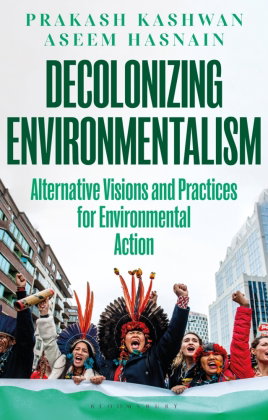
We live in a moment rife with mixed emotions-existential anxieties about catastrophic climate change, presumptuous confidence in planet-hacking geoengineering technologies, and hopefulness of youth climate activism. Decolonizing Environmentalism helps us navigate these emotions and reimagine our approach to environmental stewardship.
The authors cast a critical eye on wealthy and influential environmental groups that committed to anti-racist strategies in the wake of the racial awakening of 2020. Yet, they continue to embrace false solutions like carbon markets and biodiversity offsets, which carry deeply racialized consequences. By tracing the roots of these misplaced priorities to detrimental modernity steeped in colonialism and capitalism, the authors call for transformational changes in human-nature relationships. They distil lessons from the divestment movement, which has questioned the fossil fuel industry's moral standing, and food sovereignty activists, who have mobilized global civil society to hold agribusiness corporations accountable.
Amidst calls for "apocalyptic optimism," Kashwan and Hasnain offer a radical vision grounded in intersectional ecofeminism, Indigenous sovereignty, and strategies honed in the trenches of transnational environmentalism. In these extraordinary times, Decolonizing Environmentalism invites readers to embark on a transformative journey to embrace anti-racist, emancipatory, and regenerative approaches to environmentalism.