






Diese Website verwendet Cookies und ähnliche Technologien. Dabei handelt es sich um kleine Textdateien, die auf eurem Computer gespeichert und ausgelesen werden. Indem ihr auf "Alles akzeptieren" klickt, stimmt ihr der Verarbeitung von Daten, der Erstellung und Verarbeitung von individuellen Nutzungsprofilen über Websites und über Partner und Geräte hinweg sowie der Übermittlung eurer Daten an Drittanbieter zu, die eure Daten teilweise in Ländern außerhalb der Europäischen Union verarbeiten (GDPR Art. 49). Einzelheiten hierzu findet ihr in den Datenschutzhinweisen. Die Daten werden für Analysen und für eigene Zwecke Dritter verwendet. Weitere Informationen, auch über die Datenverarbeitung durch Drittanbieter und die Möglichkeit des Widerrufs, findet ihr in den Einstellungen und in unseren Datenschutzhinweisen. Hier könnt ihr mit den notwendigen Tools fortfahren.
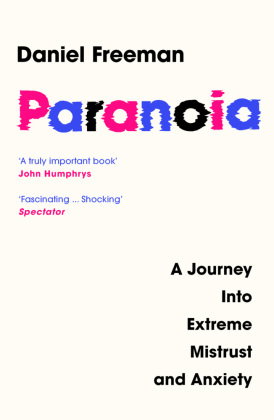
- Verlag: HarperCollins UK
- Autor: Daniel Freeman
- Artikel-Nr.: KNV97751729
- ISBN: 9780008472627
'A TRULY IMPORTANT BOOK' JOHN HUMPHRYS
'FASCINATING... SHOCKING' SPECTATOR
What is paranoia? What makes us mistrustful? How can this be overcome?
Daniel Freeman, Professor of Psychology at Oxford, has spent thirty years at the vanguard of paranoia research and treatment. This remarkable and moving book tells the story of that journey.
For decades, conventional wisdom held that paranoia was only experienced by people with severe mental health problems and little could be done to rectify its disastrous effects. Paranoia gives us a front row seat as Freeman turns the traditional view on its head.
He develops life-changing treatments for clinical paranoia - often using state-of-the-art technology like virtual reality. He reveals that suspicion is rife in society, with paranoia widespread, conspiracy theories rampant and emotion all too often trumping evidence. He discovers the causes of mistrust, including the role of genes, trauma, lack of sleep, worry, low self-confidence, cannabis use and hearing voices, and delves into the murky world of Covid-19 conspiracy theories. Lighting up the narrative throughout are the rarely heard voices of people whose lives have been almost wrecked by paranoia - and then in many cases transformed by Freeman's groundbreaking treatments.
This is also a practical book. Freeman shows how we can measure our own levels of mistrust. He explains how we can remedy things if those levels are higher than we'd like, because although mistrust can seem engrained, things can change for the better. Ultimately, it can be overcome. Compelling and compassionate, this is a gripping tale from the front line of suspicion - an impassioned plea for the urgent rebuilding of trust between us all.