






Diese Website verwendet Cookies und ähnliche Technologien. Dabei handelt es sich um kleine Textdateien, die auf eurem Computer gespeichert und ausgelesen werden. Indem ihr auf "Alles akzeptieren" klickt, stimmt ihr der Verarbeitung von Daten, der Erstellung und Verarbeitung von individuellen Nutzungsprofilen über Websites und über Partner und Geräte hinweg sowie der Übermittlung eurer Daten an Drittanbieter zu, die eure Daten teilweise in Ländern außerhalb der Europäischen Union verarbeiten (GDPR Art. 49). Einzelheiten hierzu findet ihr in den Datenschutzhinweisen. Die Daten werden für Analysen und für eigene Zwecke Dritter verwendet. Weitere Informationen, auch über die Datenverarbeitung durch Drittanbieter und die Möglichkeit des Widerrufs, findet ihr in den Einstellungen und in unseren Datenschutzhinweisen. Hier könnt ihr mit den notwendigen Tools fortfahren.
- Verlag: Wiley-VCH
- Autor: Chunxia Li
- Artikel-Nr.: KNV97772736
- ISBN: 9783527353330
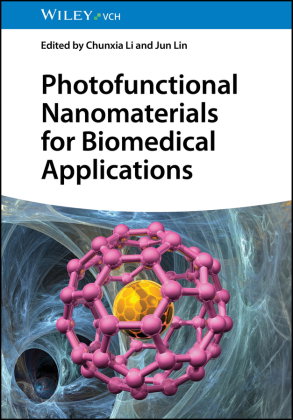
Photofunctional Nanomaterials for Biomedical Applications presents the latest research and developments surrounding photofunctional nanomaterials, including rare earth luminescence nanomaterials and photothermal agents, for biomedical applications related to imaging, biosensing, controlled drug delivery and release, and tumor diagnosis and therapy, as well as other applications such as bacteria engineering, optical information storage, acoustic sensing, and temperature detection. The book elucidates the underlying functioning mechanisms of these nanomaterials in depth and extensively discusses their current challenges and future development prospects.
Written by two highly qualified professors with significant research experience in the field, Photofunctional Nanomaterials for Biomedical Applications discusses sample topics including:
* Fabrication of composites based on lanthanide-doped up conversion nanomaterials and metal-organic frameworks
* Photosensitizers for photodynamic therapy (PDT), covering basic principles of PDT, classifications of various photosensitizers, mechanisms during treatment, and x-ray-activated PDT
* Nanomaterials-induced pyroptosis and immunotherapy including pyroptosis pathways and their potential in immunotherapy, especially in activating effector T cells and promoting dendritic cell maturation
* Design of ternary quantum dots, antibacterial mechanisms in photofunctional antibacterial nanomaterials, and inorganic nanomaterials in photothermal therapy
Establishing a robust groundwork for the future clinical translation, Photofunctional Nanomaterials for Biomedical Applications is an essential up-to-date reference on the subject for materials scientists, photochemists, biochemists, and electronic engineers.