






Diese Website verwendet Cookies und ähnliche Technologien. Dabei handelt es sich um kleine Textdateien, die auf eurem Computer gespeichert und ausgelesen werden. Indem ihr auf "Alles akzeptieren" klickt, stimmt ihr der Verarbeitung von Daten, der Erstellung und Verarbeitung von individuellen Nutzungsprofilen über Websites und über Partner und Geräte hinweg sowie der Übermittlung eurer Daten an Drittanbieter zu, die eure Daten teilweise in Ländern außerhalb der Europäischen Union verarbeiten (GDPR Art. 49). Einzelheiten hierzu findet ihr in den Datenschutzhinweisen. Die Daten werden für Analysen und für eigene Zwecke Dritter verwendet. Weitere Informationen, auch über die Datenverarbeitung durch Drittanbieter und die Möglichkeit des Widerrufs, findet ihr in den Einstellungen und in unseren Datenschutzhinweisen. Hier könnt ihr mit den notwendigen Tools fortfahren.
- Verlag: Seemann
- Autor: Stefan Weppelmann
- Artikel-Nr.: KNV97792104
- ISBN: 9783865025456
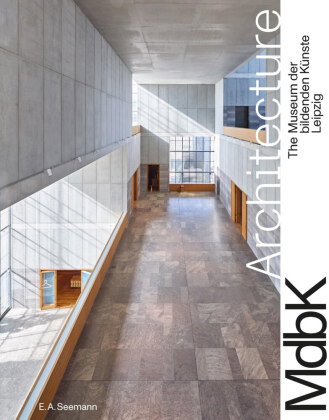
The new building of the Museum der bildenden Künste, with its impressive glass façade, is a highlight in the cityscape of Leipzig's centre. The building serves as an important cultural hub, housing one of the oldest civic art collections in Germany. This richly illustrated publication presents the historical context and design vision of the museum's construction in an accessible format. It describes the prominent location, the architectural concept and its implementation, as well as earlier buildings and interim locations.
- the definitive book on the architecture of the MdbK
- a journey through the building's history and its architecture
- includes extensive historic and contemporary photographic material
- glass, exposed concrete, shell limestone - a unique aesthetic
- a place for observing, exchanging ideas and reflecting
WHERE ART AND ARCHITECTURE MEET
The new building of the Museum of Fine Arts Leipzig (MdbK), designed by the Berlin-based architecture firm Hufnagel Pütz Rafaelian, opened on December 4, 2004 - the anniversary of the destruction of the old museum in 1943 - and has since provided a home for the museum's extensive collection spanning seven centuries. With a height of 36 meters, the structure rises over the surrounding buildings in the city centre. Courtyards and terraces open the museum toward the city, visibly echoing the principle of Leipzig's historic arcades. The remarkable spaciousness within allows for a variety of visual axis. With its open architecture, as well as courtyards and permanent exhibitions accessible free of charge, the museum offers a space for a diverse society to come together, take time, and share knowledge.
A SPACE FOR EXCHANGE AND CONTEMPLATION
This publication on the museum's architecture is being released on the 20th anniversary of its opening. With accessible texts and 100 illustrations, the book highlights this culturally significant place, going beyond its architecture and construction history. In a convenient magazine-sized format, it provides insights into the historical context and architectural design of the museum's new building while also offering a brief look behind the scenes at the spaces where important restoration, educational, and research work is carried out, making it accessible to a broader audience.
For the City of Leipzig, edited by Stefan Weppelmann and Katrin Klietsch.
The book is available in both German and English.