






Diese Website verwendet Cookies und ähnliche Technologien. Dabei handelt es sich um kleine Textdateien, die auf eurem Computer gespeichert und ausgelesen werden. Indem ihr auf "Alles akzeptieren" klickt, stimmt ihr der Verarbeitung von Daten, der Erstellung und Verarbeitung von individuellen Nutzungsprofilen über Websites und über Partner und Geräte hinweg sowie der Übermittlung eurer Daten an Drittanbieter zu, die eure Daten teilweise in Ländern außerhalb der Europäischen Union verarbeiten (GDPR Art. 49). Einzelheiten hierzu findet ihr in den Datenschutzhinweisen. Die Daten werden für Analysen und für eigene Zwecke Dritter verwendet. Weitere Informationen, auch über die Datenverarbeitung durch Drittanbieter und die Möglichkeit des Widerrufs, findet ihr in den Einstellungen und in unseren Datenschutzhinweisen. Hier könnt ihr mit den notwendigen Tools fortfahren.
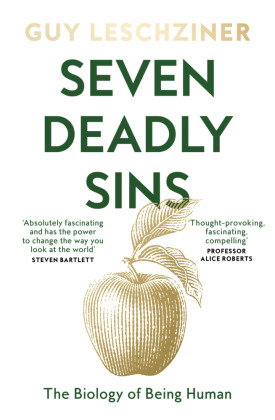
- Verlag: HarperCollins UK
- Autor: Guy Leschziner
- Artikel-Nr.: KNV97796011
- ISBN: 9780008615703
'Has the power to change the way you look at the world' Steven Bartlett
'The heir to Oliver Sacks' David Baddiel
A FINANCIAL TIMES BEST BOOK OF 2024
AN INDEPENDENT BOOK OF THE MONTH
Gluttony. Greed. Sloth. Pride. Envy. Lust. Anger.
These are the seven deadly sins, the vices of humankind that define immorality, the roots of all evil in the world. Or so some believe.
But do these sins really represent moral failings, or are they simply human functions that aid us? Are they just the result of how our bodies, psyches, and brains in particular, are wired?
This new book by Dr Guy Leschziner, a professor of neurology and sleep medicine, explores the underlying nature of the seven deadly sins, their neuroscientific and psychological basis, their origin in our genes and crucially how certain medical disorders give rise to them.
Drawing on his clinical practice, we meet individuals whose physical and psychological conditions have given rise to these sins, where brain injury or other experiences have sparked 'immoral' actions. He explores how illness can simply expose what lies within us and investigates how the origins of these traits lie in evolutionary imperatives to preserve the wellbeing of the tribe. Perhaps, he suggests, these character traits are less of a moral question and more biological, which raises fundamental issues of responsibility and blame in the face of 'sin'.
Combining cutting-edge science placed in the context of real-life experience with patients, the book reexamines where the boundaries between normal human nature, pathology and sin are drawn. And, most importantly, whether these hard-wired traits truly represent sin, or simply the intensity of our intrinsic desire to survive and thrive.