






Diese Website verwendet Cookies und ähnliche Technologien. Dabei handelt es sich um kleine Textdateien, die auf eurem Computer gespeichert und ausgelesen werden. Indem ihr auf "Alles akzeptieren" klickt, stimmt ihr der Verarbeitung von Daten, der Erstellung und Verarbeitung von individuellen Nutzungsprofilen über Websites und über Partner und Geräte hinweg sowie der Übermittlung eurer Daten an Drittanbieter zu, die eure Daten teilweise in Ländern außerhalb der Europäischen Union verarbeiten (GDPR Art. 49). Einzelheiten hierzu findet ihr in den Datenschutzhinweisen. Die Daten werden für Analysen und für eigene Zwecke Dritter verwendet. Weitere Informationen, auch über die Datenverarbeitung durch Drittanbieter und die Möglichkeit des Widerrufs, findet ihr in den Einstellungen und in unseren Datenschutzhinweisen. Hier könnt ihr mit den notwendigen Tools fortfahren.
- Verlag: Park Books
- Autor: Kirstin Feireiss
- Artikel-Nr.: KNV97796859
- ISBN: 9783038603931
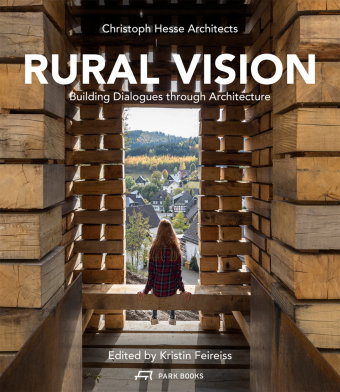
Christoph Hesse Architects are based in Berlin and Korbach, a small town in the northwestern part of the German federal state Hesse. This rural area in the green heart of Germany is the location of most of the projects the firm has realized since its establishment in 2010. Yet, occasionally, they do plant their rural concepts into an urban context. Christoph Hesse Architects and their friends see their designs as open places of culture. On the one hand, they are catalysts for change in thought, intended to change people's perspectives and stimulate their self-efficacy in society. On the other hand, they are actual interventions in globally prevailing structures that can be disrupted and changed locally. Thus, the firm distinguishes between projects acting as perspective changes and as system changers.
Rural Vision is the first monograph on Christoph Hesse Architects. It also constitutes a manifesto that illustrates how collaborative projects create social, ecological, and economic points of contact and dialogue. Moreover, they promote sustainable change that not only improves people's lives in rural areas but also redefines change as a source of innovation and social progress. The book offers alternative strategies based on selected projects through photos, visualizations, drawings, and plans, as well as essays and conversations.