






Diese Website verwendet Cookies und ähnliche Technologien. Dabei handelt es sich um kleine Textdateien, die auf eurem Computer gespeichert und ausgelesen werden. Indem ihr auf "Alles akzeptieren" klickt, stimmt ihr der Verarbeitung von Daten, der Erstellung und Verarbeitung von individuellen Nutzungsprofilen über Websites und über Partner und Geräte hinweg sowie der Übermittlung eurer Daten an Drittanbieter zu, die eure Daten teilweise in Ländern außerhalb der Europäischen Union verarbeiten (GDPR Art. 49). Einzelheiten hierzu findet ihr in den Datenschutzhinweisen. Die Daten werden für Analysen und für eigene Zwecke Dritter verwendet. Weitere Informationen, auch über die Datenverarbeitung durch Drittanbieter und die Möglichkeit des Widerrufs, findet ihr in den Einstellungen und in unseren Datenschutzhinweisen. Hier könnt ihr mit den notwendigen Tools fortfahren.
- Verlag: diaphanes
- Autor: Léonora Miano
- Artikel-Nr.: KNV97796823
- ISBN: 9783035807554
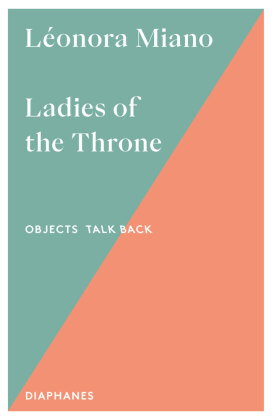
"Most of the time, it is the power of men that we remember." With these words, which open Léonora Miano's text for Objects Talk Back, an astonishing new narrative unfurls around Mandu Yenu, a throne from the ancient Kingdom of Bamum (present day Cameroon).
The Germans long claimed the object was a gift from King Njoya to Kaiser Wilhelm II. Miano reads "between the lines of beads and cowrie shells" to show the complex intricacies of colonial and gender relations. Dismissing all pretense of egalitarianism between colonizer and colonized, she hones in on the very nature of power-how and by whom it is defined-wielded-subverted.
King Njoya said he "felt like a woman in his relationship with the Germans." Miano takes this as a prompt to examine contrasting cultural notions of femininity and thus reveals how central women are to the story of the throne. As the very name of the object suggests, it is the power of women we should remember.
Series Objects Talk Back published by Stiftung Humboldt Forum im Berliner Schloss